

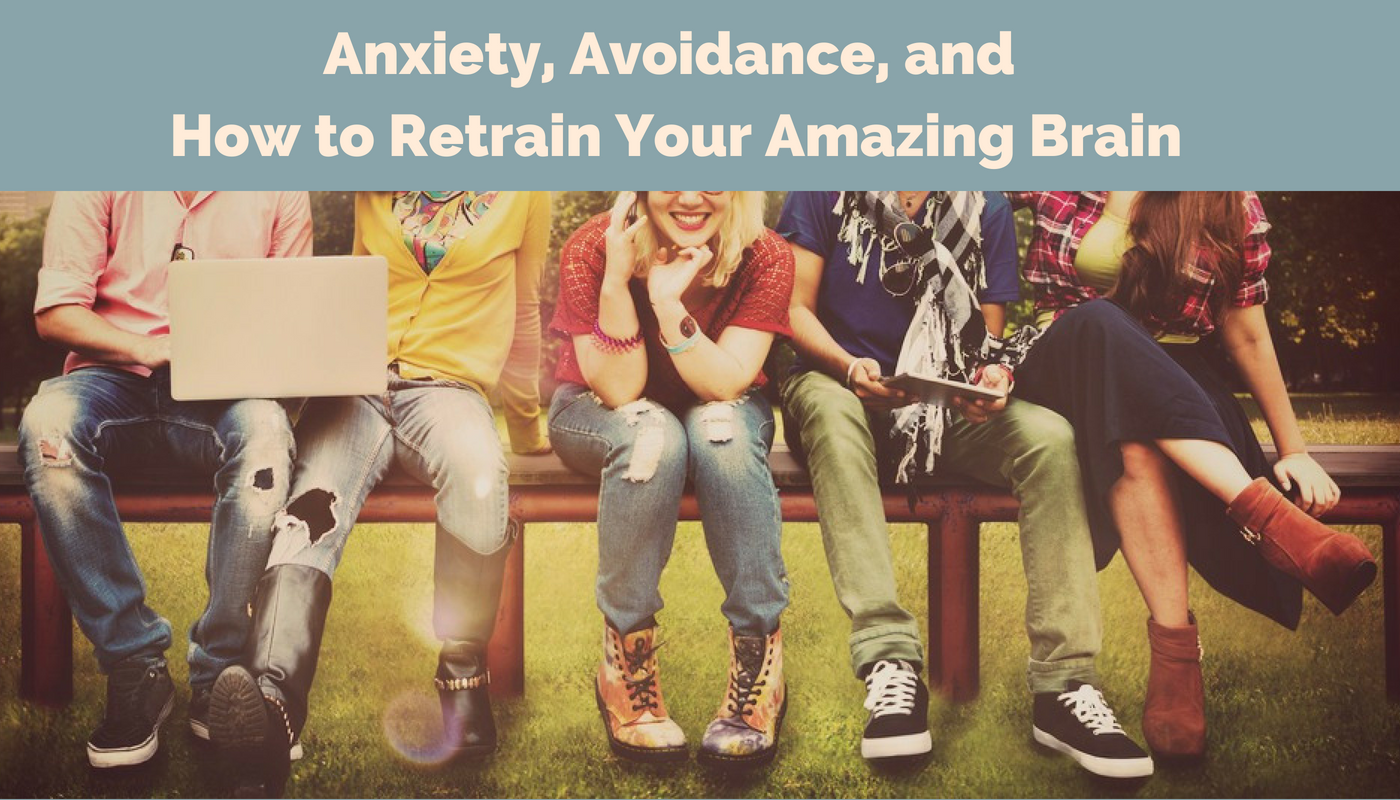
Anxiety happens in all of us from time to time. It’s a really normal, healthy response that’s designed to keep us safe. Anxiety comes from a brain that thinks there might be trouble ahead, and gets us ready to physically deal with the threat through flight or fight. (And humiliation, embarrassment, separation from a loved one, missing out, not being able to do something you want to do can all count as threats.) This can create a really strong drive to avoid whatever it is that triggers anxiety. Sometimes that avoidance will make sense, but sometimes it can actually drive us to avoid things that would actually be really good for us. The good news is that there is a way around this.
The brain learns through experience. The more you avoid something, the more you’re teaching you’re teaching your brain that the only way to feel safe is to avoid that situation – but, the more you do something brave, the more you’re teaching your brain that even though you fee anxious, you’re okay. The way to re-teach your brain to push through anxiety is with something called a stepladder. The idea is that you step gradually through increasingly anxiety-inducing experiences until you are able to do whatever it is that you’ve been avoiding.
For example, let’s say social situations trigger anxiety for you. Develop a stepladder starting with a social situation that gives you a little bit of anxiety, and slowly and gently working through steps that increase in difficultly. You might start your stepladder with going out with your family to an unfamiliar place. This might give you a little bit of anxiety, but it’s manageable. Do that a few times until you start to feel that you can handle that. Then move to the next step in the ladder. This might be going somewhere familiar with one friend. Then next step might be going somewhere unfamiliar with a couple of friends. The steps are completely up to you. Do each step as many times as it takes for you to feel okay. If a step feels as though it’s supercharging your anxiety, it’s often a sign that there is too much of a distance between the steps. Just drop back to something that feels a little safer until you’re ready to move up to the next step.
Every time you do a step, you’re teaching your brain that even though you feel anxious, you’re safe. There is no hurry to get through any of the steps, so you might stay on a certain step for weeks or months, and that’s okay. Take as long as you need until you’re ready to move to the next step. By gradually exposing yourself to these situations , you can actually re-teach your brain that you’re safe, that you’ve got this, and that there’s no need for you to avoid the situations that trigger your anxiety. Be patient, and be gentle with the steps, and you will surprise yourself with what you can do.
![It’s the simple things that are everything. We know play, conversation, micro-connections, predictability, and having a responsive reliable relationship with at least one loving adult, can make the most profound difference in buffering and absorbing the sharp edges of the world. Not all children will get this at home. Many are receiving it from childcare or school. It all matters - so much.
But simple isn’t always easy.
Even for children from safe, loving, homes with engaged, loving parent/s there is so much now that can swallow our kids whole if we let it - the unsafe corners of the internet; screen time that intrudes on play, connection, stillness, sleep, and joy; social media that force feeds unsafe ideas of ‘normal’, and algorithms that hijack the way they see the world.
They don’t need us to be perfect. They just need us to be enough. Enough to balance what they’re getting fed when they aren’t with us. Enough talking to them, playing with them, laughing with them, noticing them, enjoying them, loving and leading them. Not all the time. Just enough of the time.
But first, we might have to actively protect the time when screens, social media, and the internet are out of their reach. Sometimes we’ll need to do this even when they fight hard against it.
We don’t need them to agree with us. We just need to hear their anger or upset when we change what they’ve become used to. ‘I know you don’t want this and I know you’re angry at me for reducing your screen time. And it’s happening. You can be annoyed, and we’re still [putting phones and iPads in the basket from 5pm] (or whatever your new rules are).’♥️](https://www.heysigmund.com/wp-content/plugins/instagram-feed-pro/img/placeholder.png)


Leave a Reply