

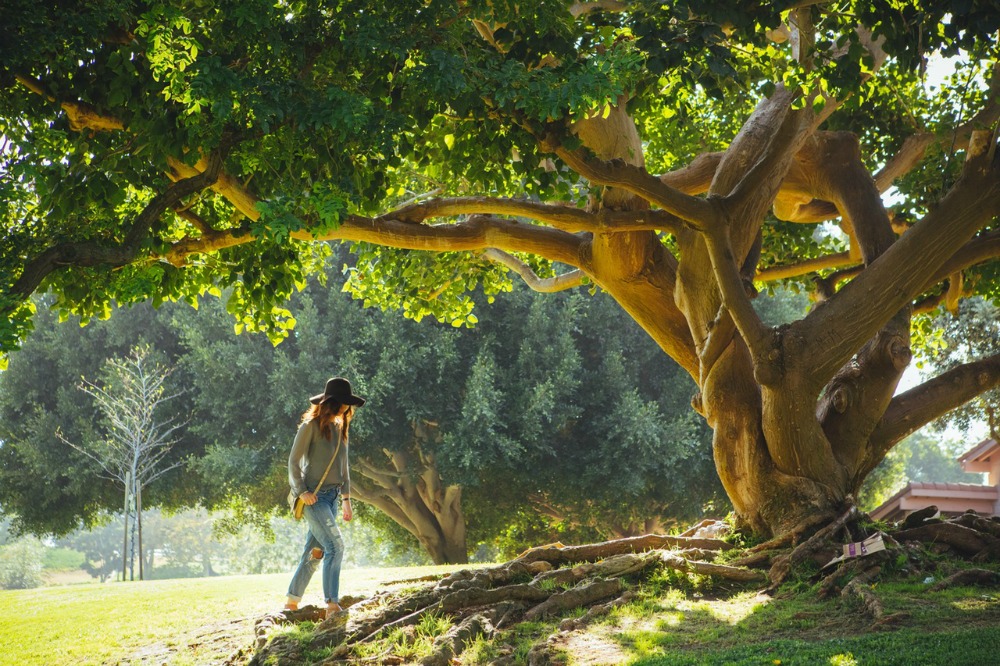
It is always a welcome thing when science confirms that the beautiful things will strengthen us, nurture us and protect us. Well here’s one for you – recent research has found that being in nature for thirty minutes a week will strengthen and protect mental health, and increase feelings of belonging.
Mental health feeds into everything we do. It powers our happiness, relationships, career, confidence – everything. It is more than an absence of mental illness, and is about realising our own capacity to thrive and cope with the day to day stresses of life. It also involves the ability to be productive and contribute something to the community that wouldn’t be there without us.
It’s not always easy to achieve strong mental health – our genetics and our environment don’t always play nicely – but there are things we can do to nurture it along. Spending time in nature is one of these ways, and research is finding that the effects of this are powerful.
Why Our Stone-Age Brains Need a Dose of Nature.
The importance of getting a weekly dose of nature for the good of our mental health probably isn’t surprising. Despite our modern, urban lives, we still have stone-age brains that have been beautifully built to thrive in stone-age conditions. When our stone-age brains are forced into a modern lifestyle, they can still flourish, provided that we fuel them with the things that they have been craving for thousands of years.
To be at their best, our brains need the things that would have been abundant and within easy, everyday reach of our stone-age ancestors. This includes plenty of sleep, physical activity, sunlight, social connectedness, a diet rich in omega-3 and nature – lots of time in nature without the complexities of urban life stretching mental resources.
It’s no secret that nature is something kind of wonderful for our minds, bodies and spirits, but what is becoming clear, is that there is a minimum dose of nature that we need to keep our mental health at its best. A study led by the University of Queensland (UQ) and the ARC Centre of Excellence for Environmental Decisions (CEED), has found that 30 minutes of nature each week will make a difference.
‘We’ve known for a long time that visiting parks is good for our health but we … have specific evidence that we need regular visits of at least half an hour to ensure we get these benefits.’ – Associate Professor Richard Fuller, UQ CEED researcher.
Okay then – show me the proof.
The research, published in the journal Scientific Reports, looked at the relationship between individual experiences of nature and various measures, including measures of mental health, blood pressure, and social cohesion.
The study involved 1538 people aged 18-70. It found that people who spend 30 minutes or more each week were less likely to struggle with stress, anxiety, depression and heart disease. The people who visited green spaces more often also had greater social cohesion.
‘If everyone visited their local parks for half an hour each week there would be seven per cent cent fewer cases of depression and nine percent fewer cases of high blood pressure.’ – Dr Danielle Shanahan, researcher, UQ CEED.
Given that mental health is fundamental to the way we think, feel and relate, both individually and collectively, any reduction in mental illness will have important implications for all of us.
Previous research: ‘Yep. Told you.’
The research builds on previous work that has found similar health effects of spending time outdoors.
Previous research has shown that 30 minutes of outdoor gardening reduces cortisol (the stress hormone) and restores a positive mood after a stressful task. Interestingly, when the same stressful task was followed by 30 minutes of indoor reading, mood continued to deteriorate during the time spent reading.
Hiking outdoors has been found to reduce negative thinking and rumination. Rumination is the obsessive, repetitive cycle of negative thinking that leads to a number of mental health issues including depression, anxiety, binge eating and post-traumatic stress disorder. People who walked for 90 minutes through a grassland reported lower levels of rumination and also showed reduced activity in the subgenual prefrontal cortex, a part of the brain that is associated with mental illness. Those who spent that 90 minutes walking through an urban environment did not show these health benefits.
So the outdoors and mental health are pretty fabulous together – but how does it work?
The researchers suggest a number of ways that green spaces might influence mental health.
- When compared to urban spaces, a green space might provide a view that has is less taxing on mental resources.
- A green space is less likely to initiate a stress response, because of the limited need for concentration or focus.
- Spending time in nature is likely to initiate the body’s own automatic psychological and physiological responses that reduce stress. This will increase positive mood and help the body and mind to recover from mental fatigue.
- Being outdoors may increase opportunities for contact with the community, which will lead to increased feelings of social cohesion and the mental well-being that flows from that.
And finally …
In a world where so many of us live in cities, with our focus and attention being drawn away from nature and towards the more synthetic, mechanical parts of the world, nature offers a way to break the city sickness that can flow from our urban lives.
Thirty minutes of nature each week is enough to work a little bit of magic for all of us by lowering our mental fatigue, improving our mental well-being, reducing symptoms of stress, anxiety and depression, increasing our connectedness with each other, and soothing our tired minds, bodies and spirits.
![It’s the simple things that are everything. We know play, conversation, micro-connections, predictability, and having a responsive reliable relationship with at least one loving adult, can make the most profound difference in buffering and absorbing the sharp edges of the world. Not all children will get this at home. Many are receiving it from childcare or school. It all matters - so much.
But simple isn’t always easy.
Even for children from safe, loving, homes with engaged, loving parent/s there is so much now that can swallow our kids whole if we let it - the unsafe corners of the internet; screen time that intrudes on play, connection, stillness, sleep, and joy; social media that force feeds unsafe ideas of ‘normal’, and algorithms that hijack the way they see the world.
They don’t need us to be perfect. They just need us to be enough. Enough to balance what they’re getting fed when they aren’t with us. Enough talking to them, playing with them, laughing with them, noticing them, enjoying them, loving and leading them. Not all the time. Just enough of the time.
But first, we might have to actively protect the time when screens, social media, and the internet are out of their reach. Sometimes we’ll need to do this even when they fight hard against it.
We don’t need them to agree with us. We just need to hear their anger or upset when we change what they’ve become used to. ‘I know you don’t want this and I know you’re angry at me for reducing your screen time. And it’s happening. You can be annoyed, and we’re still [putting phones and iPads in the basket from 5pm] (or whatever your new rules are).’♥️](https://www.heysigmund.com/wp-content/plugins/instagram-feed-pro/img/placeholder.png)


Nature is definitely the key that unlocks the door to mental and physical health!
I didn’t know about nature healing for mental stress,but I love walking in the small forest for hour….Whenever I went to my granny’s house in village ,most of the time I spent in gart or forst…….listen nature calling ,breezing,chirping……..its cherish me.
I feed the garden birds and others. I have three feeding stations and the pleasure I get out of watching the dozen or so different breeds makes me a much calmer. I have a small fish pond in the back garden and watching the fish swimming and feeding has the same effect
That part about being outside in nature vs. urban environments makes a ton of sense. The only nature where we now live near is a tiny stretch of river where I seek refuge (and I’m usually the only one there). In fact, this whole subject in general is among the most important facts that people need to learn.
I believe this is why my mental as well as physical conditions deteriorated rapidly when we moved here a few years ago. Always a nature lover, I had lived mostly in rural areas until now. The people here seem to despise and be afraid of nature. Even my psych told me I must move as he sees my mental conditions keep going down a slippery slope.
Thank you so much for the information covering how very important the connection between humans and nature should be. I am going to share it with some of these “neighbors” who just don’t get it.
This is so true! I’d venture to say only 30 min a week is little, and actually more like 30 min per day would be more helpful.
And yes, spending this time mindfully in nature by being present 100% is key. I see too many people (I’ve been guilty too :)) checking their gadgets all the time instead of immersing themselves to really reap the benefits of being outdoors.
Delia, absolutely – 30 minutes a week is a minimum but definitely the more the better!