

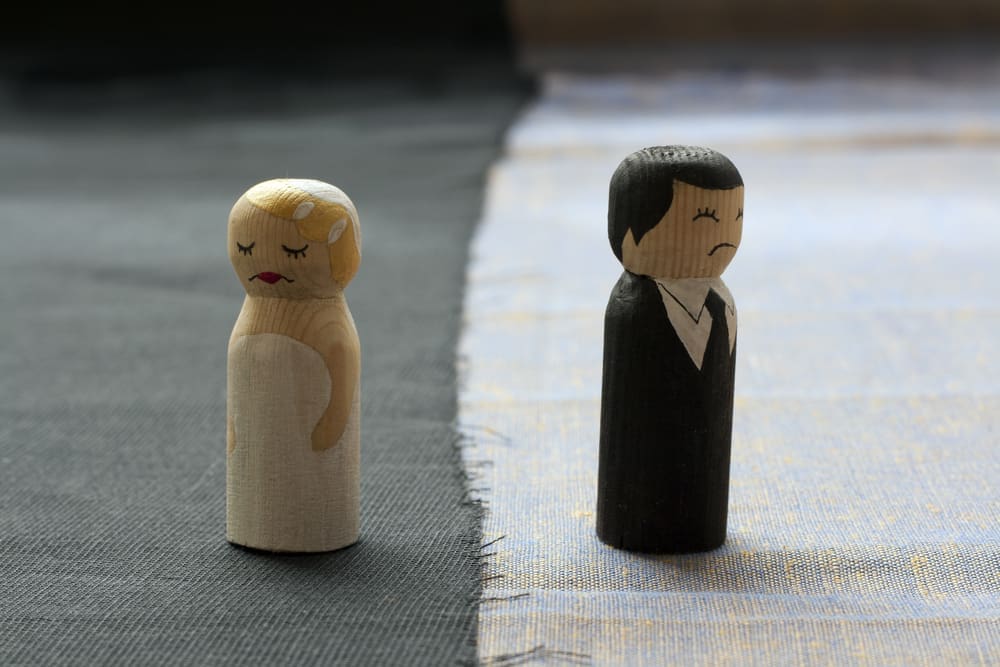
Ending a long term relationship is always hard but sometimes it gets ugly – really ugly – despite the most courageous efforts for it to be otherwise.
It doesn’t always take two to tango – unless you count one to set the pace and one to get dragged along in a savage tailwind. Of course, when there are two people acting to maim, the ugliness will be all the uglier, but it only takes one person being nasty, unreasonable and manipulative to turn a relationship malignant.
Ending a bad relationship doesn’t make the toxicity immediately wash away. Sometimes it will get worse before it gets better but always, if the relationship was a bad one, it will be worth it. Walking away takes self-respect, self-love and courage and is the only way to position yourself (and your kids if you have them) for the life you deserve.
You can’t change other people, but you would know that by now – it’s probably this wisdom that walked you out the door. If your divorce has turned into a slugfight, there are ways to look after yourself (and your kids) until you reach solid ground – which you will.
-
Be honest. And don’t let them change you.
This is important. It’s also really hard. Ask yourself, with an open heart, if you’re doing everything you can to be reasonable. None of us are perfect and a divorce can make the best of us act … how to put it without losing you … in ways that we might not be proud of.
If I’m being honest (and this is the time for it) I’m not divorced but I can tell you that I’ve had fights with my husband where I’ve been a bit of an arse for a day or so following – not because he’s deserved it, but because I’ve felt so jaded. It may have happened more than once. But definitely probably less than 10 50. I’m sure it will happen again. High emotion, shame and heartache can steal you – I know – but don’t hand over your dignity by acting in ways that are beneath you. Sometimes it’s the only thing they can’t touch. Be honest, brave and always self-respectful. If you’re acting like someone you wouldn’t want to go camping with, stop.
-
A divorce is many things. Failure is not one of them.
The end of a relationship doesn’t mean your decision to be with your ex-partner in the first place was flawed. The success of a relationship isn’t determined by how long it lasts. The investment of love and energy in a relationship will always be worth it, but it won’t necessarily guarantee forever. The past is the past and sometimes love, time, commitment and desire don’t stretch as far ahead in years as we’d like them to – and that’s okay.
People change. Circumstances change. Relationships change. In a Harvard study, psychology researcher Daniel Gilbert and colleagues found that people underestimate how much they will change in the future. We change a lot. Sometimes it’s in the same direction as the person we love and sometimes we veer sharply in a different one. Sometimes we wake up next to each other and realise we couldn’t be further apart. It happens. It’s part of being human.
-
You don’t have to do it all. You just have to do enough.
Life changes sharply when a relationship breaks down. You don’t have to do everything the way you used to. You don’t have to do everything, fullstop. You just have to do enough. Figure out what that looks like and go with it. You deserve the freedom that comes from that.
-
See the response of your ex-partner for what it is.
When a marriage or relationship breaks down it will likely bring shame, and breathe life into every fear of not being good enough, normal enough, successful enough and perhaps most heartbreakingly, loveable enough. People have all sorts of responses to shame, some of which are completely unfathomable to those of us looking in from the outside. When shame is involved, people will do anything to protect themselves. Here are a few. You might also recognise some in yourself from time to time.The more awareness you have around what you’re doing, the more capacity you’ll have to stop it:
♦ They might be cruel.
If you were the one to leave, there’s probably been a shift in power from your ex-partner to you. It’s likely he or she will be feeling disempowered, ineffective and small. Cruelty is an attempt to reverse this by shrinking you. You can’t stop them trying. But you can stop it working.
♦ They might criticise your choices and accuse you of being out of control.
You’re not out of control – just out of their control. Any choice you make in independence will send a message like a slap that yor’re no longer under their influence. As with anything, when what people have always done (control, disrespect, manipulate) stops working, they will do it even more before they stop. It’s human nature. Hold tight and keep going.
♦ They might manipulate.
Manipulation is a way for people to get what they want without being rejected, by taking away the option to say, ‘no’. For people who manipulate, ‘no’ doesn’t feel like a rejection of a request, it feels like a rejection of them. As a result, they’ll do whatever is necessary to get their needs met without putting themselves in the position of being rejected. You might not be together any more, but you’ll still have things that they want – the kids, attention, co-operation, your happiness, your power. Sadly for some people your disrespect will be easier to handle than your ‘no’.
♦ They might get angry.
Anger always exists to protect more vulnerable feelings such grief, fear or inadequacy from pushing to the surface. When a relationship ends, there will be feelings of deep loss, sadness and disconnection that can feel frighteningly bottomless. It’s much easier to attach these intense feelings to a target (you) than to acknowledge them..
♦ They might try to control you.
All control is an attempt to relieve anxiety – around uncertainty, around not getting what they want, about things not going to (their) plan, about losing you. It’s not the best way to go about it and there are plenty of people who deal with their anxiety without needing to control people, but some people don’t know how to do it any other way.
-
Just because it feels bad to stay, doesn’t mean it will feel good to leave.
Even if it’s a change that’s going to be good for you, there will still be huge life adjustments that need to be made. Don’t take bad feelings as a stop sign. You’re acting with courage and positioning yourself for what you deserve – a life filled with love, happiness and security. Keep going. Take the discomfort as evidence of the gap between the life you’ve been living and the life you’re about to. That’s a good thing. You deserve more than you’ve had.
-
Kids: The opportunity to teach them.
If you have kids, know that you’re teaching important lessons, no matter what. Even if your ex partner is being a toxic, nasty, manipulative [insert your own word here], the way you deal with that will model important life lessons for your kids. If everything is always honey and roses, kids won’t have as many opportunities to learn about the challenges that come with living life. Here are some of the lessons you’ll be teaching:
They’ll see: A relationship gone bad.
Teach them: ‘The good ones are worth the greatest risk. The bad ones always have something to teach. It’s always okay to walk away.’They’ll see: Their other parent is good to them and awful to you.
Teach them: ‘You won’t get on with everyone – and that’s okay. You don’t have. It doesn’t mean the other person is bad, sometimes they can be wonderful. It just means the combination of the two of you doesn’t work.’They’ll see: The people they love and depend on get sad.
Teach them: ‘Even grown-ups get sad sometimes but that doesn’t stop them from being happy most of the time. I’ll be okay and so will you. People feel better after crying because it’s the body’s way of feeling better.’ (According to biochemist William Frey, sad tears contain stress hormones and toxins that accumulate in the body during stress. Crying is the body’s way of cleansing itself.)They’ll see: People aren’t always nice to each other and sometimes, they’ll try to turn you against people you care about.
Teach them: ‘When people say mean things it’s always because they’re trying to make someone feel as bad as they do. Just because someone says things, doesn’t mean those things true. People have all sorts of reasons for saying mean things and sometimes the truth isn’t one of them.
They’ll see: Sometimes life gets hard.
Teach them: ‘The greatest lessons come from the hardest things. Whenever you go through anything difficult you’ll always – always – come through wiser, stronger and braver than you were before. Wherever there’s a dip a rise will always follow.’ -
Have self compassion.
It doesn’t work when other people are cruel to you (because you have too much self-respect for that, right) and it doesn’t work when you’re mean to yourself. Self-critism, self-blame and your inner self critic will fall you if you let it. There is a part in all of us that’s vulnerable, receptive and open to love, approval and being noticed. Speak to yourself as though that part is always listening, because it is. Make sure the things you say to yourself are kind, loving and compassionate. If it’s not your way to be kind to yourself, try it – and watch things change for you.
-
Accept that it’s going to get unacceptable.
Unhappiness comes from the divide between what we expect and what we have. Let go of thinking that this whole situation might feel okay soon. You’ll find a freedom in that. If the situation is bad enough, it might not feel okay until the kids are grown and left home and there’s no need for you to talk to each other any more.
If your ex is truly awful, their attempt to win at any cost may be relentless. They’ll decide on the issue and the fight will be on – money, custody, how awful you are, whose turn it is to have the kids for Christmas, whether you should be breathing in first or out first.
More than likely, the topic will be irrelevant. The issue will be one of control, probably born from losing you. Keep your perspective and remember what’s important. Being good for your kids will always be more important than winning the fight. Let them see you modeling resilience, strength, compassion and emotional muscle. You’ve got it in you. It might take all you’ve got, but it‘s in you. There will be things said and things done that you just can’t control. Fight the important ones, let the others go. Be who you are and let the truth fight it out for you.
We all have within us the courage, strength and wisdom to deal with the challenges that life sends our way. Trust this and reach for it. It’s there. Nothing we go through is ever wasted and it’s important to be open to the learnings. Rather than, ‘Why did this happen to me?’ try, ‘What can I learn from this?’
You might lay awake at night, cry in the shower, scream in the car and fall apart in front of your closest friends. You might wonder how it got to this and when it will end. Just hold steady and keep moving moving forward. When you put yourself on the right path, good things will always come.
You might also like TOXIC PEOPLE: 12 THINGS THEY DO AND HOW TO DEAL WITH THEM.
See here to understand why a breakup feels like it does: YOUR BODY DURING A BREAKUP: THE SCIENCE OF A BROKEN HEART
Leave a Reply