


Invisible disabilities are just that…invisible. It’s one of the most difficult obstacles to overcome when identifying and treating mental health issues and learning differences.
Before I get started, I do want to clarify my stance on the phrase ‘invisible disability’. I use this term throughout my article so that people can find this post if they are searching for information connected to that terminology. It is however very important to me that people understand that disabilities are really just differences.
As we all know every person has strengths and weaknesses. Life is about leaping over hurdles and expanding our world. Each and every human being has challenges that are unique to their personal circumstances. It is my sincere goal to help people reach for the stars and make their dreams reality.
Over the course of my career I’ve seen just that – if they get the help they need. That being said, there are way too many people who fall through the cracks and are expected to accomplish tasks that are outside their current abilities simply because caregivers, family members, educators and doctors fail to recognize their challenges.
So, what are invisible disabilities? In a nutshell, it’s when someone suffers from a neurological or physical condition that impairs physical movement, interaction with others, career progression or academics. Unfortunately, these issues may not be immediately apparent to others.
A great example of an invisible disability is ADHD or ADD. One of the most common misconceptions about people with attention deficit is that they’re disinterested or possibly less capable than their peers. Nothing could be further from the truth! In fact, I’ve found most of my patients with ADHD or ADD have extraordinary gifts that shine through once they learn to deal with areas of weakness. With assistance, people with ADHD and ADD become very successful members of society.
Some other examples of invisible disabilities are:
• Social anxiety
• Depression
• Fibromyalgia
• Closed head injuries
• Epilepsy
• Diabetes
• Cystic Fibrosis
Let’s be frank, it’s tough to comprehend what you can’t see with your eyes. For example, a teacher would never pressure a person with a broken leg to join track & field. That’s obvious – but what’s not so obvious is the student living with social anxiety. They’re expected to attend class and give presentations like everyone else. Unfortunately, there is little understanding or accommodation when it comes to this type of challenge. Students with social anxiety can achieve as much as anyone else, but like all students they need the right support to reach their full potential. Their ability isn’t the problem, but anxiety without appropriate support or understanding can be.
There are no cold hard figures for Americans with Invisible Disabilities. This is because they’re not “seen”, or are underreported. We do know however, that there are millions of people who aren’t getting the assistance they need.
To give you a little insight, in 1997 only 7 million of the 26 million categorized as having a severe disability needed a wheelchair, a walker or crutches. The point is, things aren’t always what they seem.
Education & Identification
Too many people are missing out on the help they need educationally, medically and psychologically – help that would ensure their future success. Some of the most important information educators, parents and healthcare professionals can have is a list of red flags to help them identify those who are in danger of slipping past unrecognized. Here is Laura Eskridge’s list of red flags for age related learning disabilities:
1. Preschoolers: Difficulty pronouncing words, rhyming, learning basic letters, numbers, shapes and colors.
2. Kindergarten – 4th grade: Difficulty connecting letters with sounds, understanding basic words, remembering facts and consistent reading and spelling errors.
3. 5th – 8th grade: Difficulty understanding and comprehending reading materials, has a tough time following oral instructions and comprehending spelling strategies.
4. High School & Young Adults: Spells the same word differently depending on circumstances, has difficulty answering open-ended questions, understanding abstract concepts, misreads information and has a tough time focusing on details.
Here is the American Psychiatric Association’s list of mental health red flags:
1. Withdrawal
2. Problems thinking
3. Increased Sensitivity
4. Apathy
5. Feeling Disconnected
6. Illogical Thinking
7. Nervousness
8. Unusual behavior
9. Mood Changes
10. Drop in Productivity
11. Changes in Sleep & Appetite
Let’s Destigmatize Challenges
Aside from lack of detection, one of the biggest problems is denial. For many it’s easier to just get by than it is to admit there is something more going on. That’s why education is so very important.
The truth is, all of us have challenges. The beauty of neuroplasticity is that the brain changes until the day you die. With simple exercises, you can quite literally alter your world. An invisible disability doesn’t have to DIS-able you. In fact, it can be your superpower.
9 Simple Solutions for Better Mental Health
Here are 9 tools I use to help patients overcome weaknesses and uncover their strengths.
1. Solid sleep hygiene.
There’s no replacement for good sleep; this is the time your brain takes to repair the ravages of daily stressors. Be sure to get your beauty rest. It’s a quick and easy path to better mental health.
2. Brain training.
This is a no brainer (pardon the pun). Strong brains have a much better chance of overcoming challenges. Cognitive fitness is a must. You have probably heard of lumosity.com. They have 50 free cognitive games for you to sample. Brains need exercise as much as bodies do.
3. Physical activity
Humans are complex organisms. There isn’t a single part of our physiology that doesn’t interact and communicate with the rest of the organism. Simply put, a healthy fit body supports a healthy, fit brain. Walk, run or maybe practice some yoga. t doesn’t matter how your body moves – just that it moves.
4. Mindfulness exercises
Being present is very important. 99% of anxiety would cease to exist if we didn’t worry about the past or what we imagine might happen in the future. The present is a pretty cool place to hang out and be well. I highly recommend meditation and there are many scientific studies to back me up. If you want some more information click here.
5. Stress management.
… And I don’t mean squeezing tennis balls or drinking herbal tea. The key is to get to the root of what is causing stress in your life. Once you do that then you can commit to a plan to eliminate it. Maybe you need a new job or to ditch toxic relationships. Whatever it is, now is the perfect time.
6. Nutritional assessment.
This is my favorite soapbox. Respect yourself enough to honor your body, mind and soul with only the best food. One rule of thumb is to try to stick to eating things with three ingredients or less. For example, what is a Cheeto? I’ve never seen a Cheeto tree, have you? If you can’t grow it, best to avoid it.
7. Pursue creative endeavors.
This is the best channel for whatever ails you. Paint, sing, dance, cook, write, carve, sculpt, fly a kite – do anything to channel negative energy into something beautiful.
8. Talk, talk, talk.
Whether you seek counsel from friends, family or a therapist – talk! The expression, pain shared is pain halved is so very true. Humans are relational by design. When you are heard by a compassionate, caring human your burden is reduced.
9. Equine therapy.
Hang out with horses. They have a very special bond with humans. Not only do they mirror human emotions, but also they’re very sensitive and intuitive creatures. Interaction with horses is very powerful therapy.
If you suspect you (or someone you love) might have an invisible disability it’s important to know that that with some simple tools, it’s possible achieve success in areas you never imagined; and most importantly, on the other side of every disability is a superpower.
About the Author: Dr. Lynn Fraley
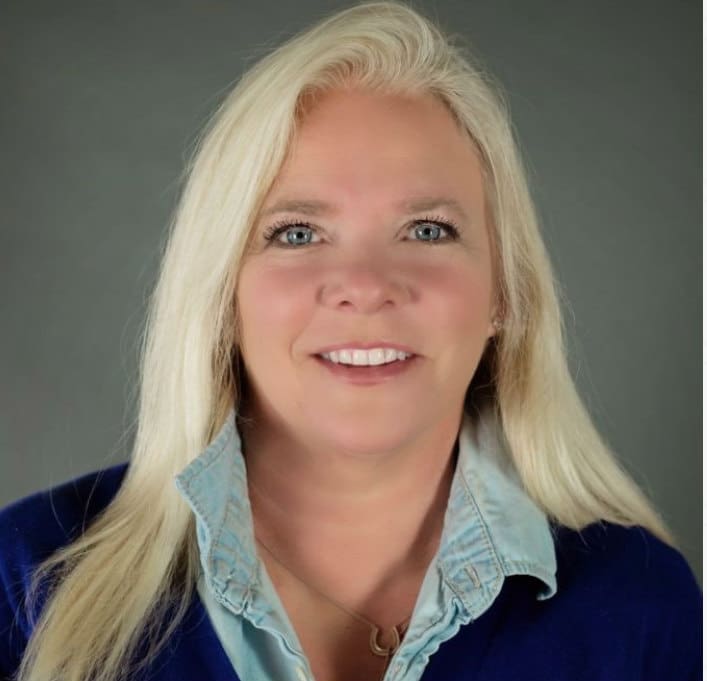 Dr. Lynn Fraley is a Clinical Mental Health Professional in the State of Washington, a Licensed Clinical Professional Counselor in the State of Idaho and is certified by the National Board of Counselors. She has worked with child and adult survivors of all types of abuse, chemical dependency, divorce & blended family structures as well as more severe and long-term mental illnesses. Her primary areas of focus are cognitive rehabilitation, individual psychotherapy & paediatric developmental issues. She has also been designated as a certified expert, by the American Academy of Experts in Traumatic Stress and holds a specialty board certification in Sexual Abuse by AAETS
I have Narcolepsy and a friend that can’t accept the fact that can’t do certain activities. She just want’s me to be her normal … I’ve to educate her and she still can’t accept it. I was diagnosed 45 years ago with Narcolepsy … Hard to have and keep friends because they can’t see it it doesn’t exist and can’t understand my lifestyle to deal with it … What do I do She just keeps telling me “Yes Charlie I understand an reverts back to ignoring it …
My 13 year old son has suffered with ADHD all his life. He has been treated by teachers and principals like an intensionally bad kid and a criminal. He is very intelligent but is failing every subject and skipping out because of this treatment and prevailing attitude as well as being bored out of his mind. His father is a complete narcissistic alcoholic who mentally and emotionally abuses him by blaming him for everything as well as a myriad of other ways.
He is going through a psych-ed assessment in hopes of getting the teachers to recognize his ADHD as real and valid and treat him with compassion and understanding instead of disdain. He’s on meds and has been moved to a new school but it’s a battle for him to go to school and for myself everyday advocating for him at doctors, pediatricians, psychologists never mind the school and his “father”. It floors me that he is blamed and punished instead of people trying to find out WHY he’s acted out or done something. They jump straight into discipline mode when maybe he needs a friendly ear, a hug or some food. I have ADD to a lesser degree so I can relate to him and of course I love him fiercely 🙂 even though he is hard work most of the time… Basically I think the whole world needs to slow down and people need to make more time for each other, give each other the benefit of the doubt, cut some slack and remember that people are generally doing the best they can at any given moment – especially children!
I think Obsessive Compulsive Disorder is one of the worst invisible disabilities. Could you email more articles on how to deal with OCD. Even the person suffering from OCD has to suffer from hatred of his own family, who consider him a burden, but its difficult for him to purchase the expensive medicines.
Yes I hear you. OCD can be so intrusive. I will write more articles on this. In the meantime, as it is a form of anxiety the articles on this link will hopefully provide you with some information that will be useful to you https://heysigmund.com/category/being-human/anxiety/