
0 items | AUD  0.00

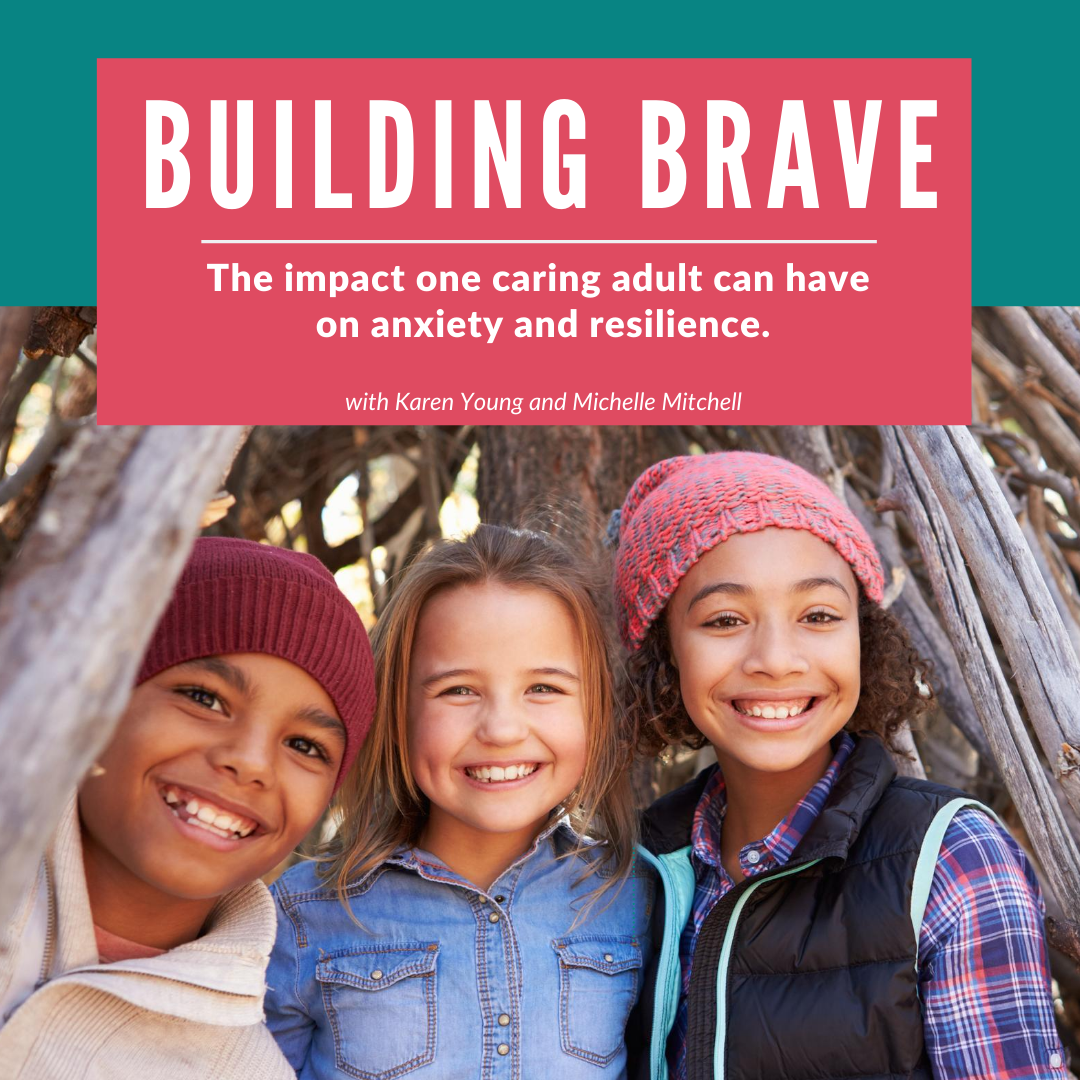
Building Brave – For anyone who lives with or works with kids or teens.

What could our children do if they truly believed they were brave? In this transformational, heartfelt event, Karen Young and Michelle Mitchell come together to equip parents, carers and professionals with powerful strategies to help children and teens build resilience, thrive through anxiety and reach their potential. We will explore:

  • the powerful role that caring adults play in building brave;
  • a new way of understanding the role of anxiety and resilience in your child’s life;
  • the often unrecognised and different ways anxiety can manifest in children;
  • the impact of anxiety on friendships and school work;
  • proven, practical ways to respond to anxiety and make way for calm and courage;
  • how to build social resilience and equip them for the challenges of life;
  • how to strengthen your connection and influence.

    You know your child is capable of greatness. With some very specific strategies and solid information, we can make sure they know it too.

    If you would like BUILDING BRAVE to come to your school or community, please let us know. We will be touring nationally with this new project.

    Join our newsletter

    We would love you to follow us on Social Media to stay up to date with the latest Hey Sigmund news and upcoming events.

    Follow Hey Sigmund on Instagram

    When terrible things happen, we want to make sense of things for our kids, but we can’t. Not in a way that feels like enough. Some things will never make any sense at all.

But here’s what you need to know: You don’t need to make sense of what’s happened to help them feel safe and held. We only need to make sense of how they feel about it - whatever that might be.

The research tells us so clearly that kids and teens are more likely to struggle after a tr@umatic event if they believe their response isn’t normal. 

This is because they’ll be more likely to interpret their response as a deficiency or a sign of breakage.

Normalising their feelings also helps them feel woven into a humanity that is loving and kind and good, and who feels the same things they do when people are hurt. 

‘How you feel makes sense to me. I feel that way too. I know we’ll get through this, and right now it’s okay to feel sad/ scared/ angry/ confused/ outraged. Talk to me whenever you want to and as much as you want to. There’s nothing you can feel or say that I can’t handle.’

And when they ask for answers that you don’t have (that none of us have) it’s always okay to say ‘I don’t know.’ 

When this happens, respond to the anxiety behind the question. 

When we can’t give them certainty about the ‘why’, give them certainty that you’ll get them through this. 

‘I don’t know why people do awful things. And I don’t need to know that to know we’ll get through this. There are so many people who are working hard to keep us safe so something like this doesn’t happen again, and I trust them.’

Remind them that they are held by many - the helpers at the time, the people working to make things safer.

We want them to know that they are woven in to a humanity that is good and kind and loving. Because however many people are ready to do the hurting, there always be far more who are ready to heal, help, and protect. This is the humanity they are part of, and the humanity they continue to build by being who they are.♥️
    It’s the simple things that are everything. We know play, conversation, micro-connections, predictability, and having a responsive reliable relationship with at least one loving adult, can make the most profound difference in buffering and absorbing the sharp edges of the world. Not all children will get this at home. Many are receiving it from childcare or school. It all matters - so much. 

But simple isn’t always easy. 

Even for children from safe, loving, homes with engaged, loving parent/s there is so much now that can swallow our kids whole if we let it - the unsafe corners of the internet; screen time that intrudes on play, connection, stillness, sleep, and joy; social media that force feeds unsafe ideas of ‘normal’, and algorithms that hijack the way they see the world. 

They don’t need us to be perfect. They just need us to be enough. Enough to balance what they’re getting fed when they aren’t with us. Enough talking to them, playing with them, laughing with them, noticing them, enjoying them, loving and leading them. Not all the time. Just enough of the time. 

But first, we might have to actively protect the time when screens, social media, and the internet are out of their reach. Sometimes we’ll need to do this even when they fight hard against it. 

We don’t need them to agree with us. We just need to hear their anger or upset when we change what they’ve become used to. ‘I know you don’t want this and I know you’re angry at me for reducing your screen time. And it’s happening. You can be annoyed, and we’re still [putting phones and iPads in the basket from 5pm] (or whatever your new rules are).’♥️
    What if schools could see every ‘difficult’ child as a child who feels unsafe? Everything would change. Everything.♥️