

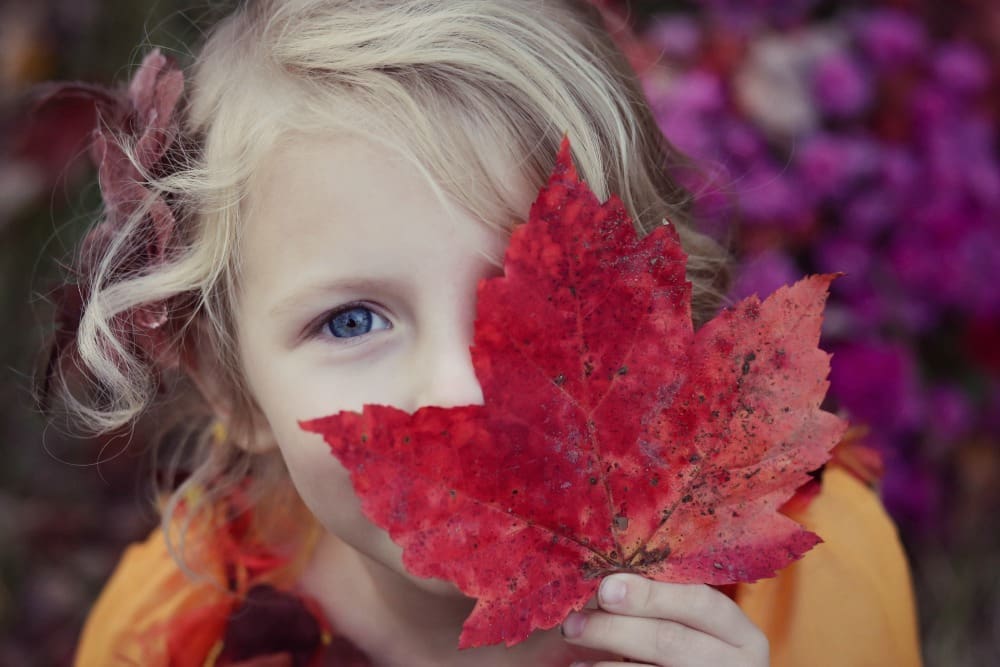
Have you ever met a kid who always seems to dissolve into a puddle after being corrected, even gently? Do you know a child who can’t stand socks that have a seam or shirts with tags? Do you know a child who seems to intuit your thoughts and feelings before even you can identify them? These are all features of sensitivity, a personality trait found in about 20% of the population.
Sensitivity is a quality that is often misunderstood and frequently judged. And because strangers and loved ones alike love giving unsolicited parenting advice, parents of highly sensitive children (HSCs) have heard it all. Here’s a list of actual statements made to parents of HSCs that would have been better left unsaid.
1. “He’ll have to toughen up someday.”
Science begs to differ. People with a “sensory processing sensitivity (SPS)” as determined by a highly sensitive person (HSP) scale show heightened brain activity when exposed to various stimuli. “…HSP scores were associated with stronger activation of brain regions involved in awareness, empathy, and self-other processing. These results provide evidence that awareness and responsiveness are fundamental features of SPS, and show how the brain may mediate these traits.” Highly sensitive people don’t just “toughen up,” they are hardwired for sensitivity. They may develop emotional calluses as a defense mechanism, but they’re likely the same sensitive people under that persona.
2. “She sure is emotional!”
This might be an accurate observation, but it’s not a helpful one. HSCs often experience emotions more intensely than other children. Ted Zeff, Ph.D who is an expert on sensitivity explains in an interview with the Huffpost that highly sensitive people “…like to process things on a deep level…They’re very intuitive, and go very deep inside to try to figure things out.” The good news is emotions aren’t inherently good or bad; they’re a neutral fact of life. We only experience problems when we attempt to control our children’s emotions or place a value on them.
3. “You’re just projecting.”
There are data to suggest that sensitivity has a genetic component. As a highly sensitive person with many highly sensitive relatives, this couldn’t be more obvious to me. So when a parent intuits his child’s feelings, it’s mostly likely because he too has heightened sensitivity! It isn’t so much a matter of my projecting my sensitivity on my son as my relating strongly to his experiences.
4. “She’s manipulating you.”
When a child expresses a need, they aren’t scheming; they’re feeling vulnerable and turning to their secure base for safety. HSCs typically have a lower threshold for stimulation and express their feelings more strongly than less sensitive children. Plus as Dr. Deborah MacNamara points out, they often require more attention before their emotional needs are met. None of this is manipulative. If you have one child who needs a snack mid-day and one who doesn’t, you wouldn’t label the one who needs a snack as manipulative or read some dark intention into a request to eat. You’d take it at face value. Emotional needs should be treated the same.
5. “He STILL doesn’t sleep through the night?”
Ask any parent of an HSC, and they will likely mention sleep woes. It’s difficult for HSCs to filter out information, including their own thoughts and feelings. One sleep expert on the Sleep Lady website observes, “Highly sensitive children may have even more difficulty shutting these feelings out when it is time to go to sleep.” I assure you, you’ve never met a person who has worked harder to try to get a child to sleep than I have. I remember the day I finally gave up the battle and decided to listen to my kid and not the books, experts, and lay people who love doling out advice. His sleep didn’t improve, but my attitude did.
6. “Sometimes we just have to make our kids do things they don’t want to do.”
This is a valid argument if what your small child doesn’t want to do is ride in her car seat or hold your hand while crossing a busy road. This does not apply to social situations or experiences a highly sensitive child is not yet equipped to handle. This isn’t to say we should coddle our HSCs, but we should take their lead and only push gently when we’re confident they’re ready for a new experience in which they are likely to thrive.
7. “You’re going to have to cut the cord at some point.”
Highly sensitive children often need extra time to warm up to new situations and people. They may not be ready for preschool when their peers are, and they may stick to us like glue in new situations. Listening to your HSC doesn’t make you a helicopter parent, it makes you one who is attuned to the needs of your child. I once visited a child psychologist to discuss my HSC. I was wracked with guilt that I was delaying his introduction to school by a year, and I was worrying he would be delayed in some profound and irreversible way. The psychologist reminded me that it’s a distinctly American trait to rush our children into each new phase of development. Allowing our children to grow at their own pace is a gift to them and ourselves; there’s no reason to put undue pressure on ourselves to make our children independent or self-reliant before they’re ready.
The expert of sensitivity and originator of the concept of the highly sensitive person, Dr. Elaine N. Aron, encourages parents to view sensitivity as the gift that it is. She observes that highly sensitive children challenge their parents to become more emotionally aware, are capable of connecting on a deep and meaningful level, and if given the support he needs, a highly sensitive child will, “make an exceptional contribution to the world.”
To determine if you’re raising a HSC, you can take this quiz.
About the Author: Megan Stonelake
 Megan Stonelake is a therapist, blogger, and mama to a sweet four year old. Most recently she has written for Scary Mommy, Huffpost Blog, Sammiches & Psych Meds, and Parent.co. Her fascinations include child development, empathy, and all things parenting. Head over to her blog, Empathic Parenting, where you can sign up for her newsletter to receive tips and musings on peaceful parenting. You can also follow her on Twitter and Facebook.
Very informative! I am highly sensitive (36yrs) and came across this page looking for tips to parent (and secure and nurture) my inner child. This has made me aware of how I wanted to be treated when I was a little girl, but I did not have the words for it. Thank you for helping my inner child voicing what she needs from me <3
Really suprised with these things, i have thought it would be different. Thanks for useful information.
Hi, thank you for the great article. I often write on HSC having two myself! The more I learn, the more I realise that it really does take a change in attitude to parent a HSC. Thanks for the encouragement.
My highly sensitive 5 year old daughter is truly a joy but it has been hard trying not to compare her with other “outgoing” children who dive into every situation. I worry that her shyness will hinder her.
She needs me to lay with her to sleep and will wake up during the night which will result in me just sleeping with her. I worry that I’m causing some of her anxiety by never properly teaching her to sleep independently. I’ve always co slept. Do you believe sleeping will naturally improve as our children get older?
Hi All,
I am the mum of a gorgeous 26 year old daughter, and a wonderful 24 year old son. My son was the most content baby ever. However, my daughter was the most sensitive baby … a non stop grizzle – until she could talk! And she talked…. And I listened. She HATED those socks with the seam in the toe, and that once loved pillowcase that now has started to pill and that rug with the lumpy bits and that pink tee-shirt with the fairies because the scratchy tag rubbed on her neck. How I wished she could have told me (in words) when she was a newborn… She was a sensitive toddle, a sensitive child, a sensitive teenager, and now she is expecting her first child. And, yes, she’s a sensitive expecting Mum. I so love her, as she has made me a more sensitive, understanding person. She has taught me to listen, rather than complain. She has taught me that through my listening and understanding, I have the opportunity to make life a little better for those around me. These sensitive people in our lives are a reminder to us that we are all so wonderfully different, and individual and special. We are not all alike. We each have an equally real point of view and experience! Truly appreciate their view of the world, and it will widen and deepen your experience too. Yes, I too believe that sensitivity is inherited, but I pray my efforts to ‘break with generational cycle’ will be effective, not by toughening someone up, but because of my increased sensitivity – to listen, learn and truly understand. Love to you All.
Dear Dee,
I so can relate to you. You sound exactly like me…I too cry when I’m happy, sad, mad etc. I too was and still am considered an “over-reactor”, I too am married to someone who thinks I’m “too sensitive” and doesn’t understand (since he can be highly insensitive and cold). However, I wouldn’t change being this way for anything though. No matter how many people don’t understand me (my siblings, my parents, my husand, my kids, my mother-in-law) I feel I offer what maybe tougher less sensitive people can’t…a lot of caring towards others, a lot of concern for others well being, empathy, as well as sympathy. Be proud of who you are and don’t let anyone including your husband make you feel ashamed for being you.
I love this article ! As a child I grew up with a friend that was highly sensitive. One of my daughters and two grandchildren that are HS . She is so empathetic to others as well. My daughter is so good at loving and supporting them . She also has come up with some great ideas that have helped her daughters
conquer the sleep situation as well.
While I’m not a parent, I find it sad that people feel it appropriate to comment on any aspect of another’s parenting style. Its one thing to ask for advice and receive it, but another to be branded with the opinions of others.
I love the advice on this topic. As a HSP who was a HSC and introverted, with 2 parents who were very outgoing, extraverted and gregarious, I was often pushed to do things way outside my comfort zone. I would just shut down and then be told I was pouting, sulking, and my behavior was unacceptable. They thought there was something wrong with me and that is what I internalized. There was no term for this condition when I was growing up in the 1950’s/1960’s other than “shy.”
It’s wonderful that we now have the language to describe this common trait, and I do hope it will continue to become a more accepted variation of normal.
Not only do I have a daughter like this, this has been me my whole life. My family never understood and had no patience for it. They would get mad at me for being “over sensitive” and say “oh, don’t worry about D, she overacts to everything”. I now have a husband who is like that. He definitely falls into the toxic person category as well. The longer we are together, the nastier he becomes. He thinks I overreact and am too sensitive. I try to work with my daughter in being patient with her and telling her is alright to be sensitive. People like us need someone who understands our sensitivity. I cry when I’m happy, sad, mad, offended, etc. and I see my daughter doing the same thing. I wish I could change it for her. Being sensitive my whole life has been so difficult. Especially at work, but I know there is nothing I can do to help her. We are both just hard wired that way.
Dee, you and your daughter absolutely need someone who loves you because of your sensitivity, not despite it. I imagine that being with you would be like living in full colour. You would have so many wonderful qualities because of your sensitivity, and the message for your daughter is to find be with people who want to embrace it, rather than people who want to change it.
My experience, and that of many others, is that we chose a mate or significant other who models the toxic criticism we have not learned to separate from, that we usually heard from critical parent. Prevent poisoning another generation by working this out or dumping the s.i.!
Thank you; I couldn’t agree more. I hope she finds someone who will embrace her sensitivity too. She has so much to give and she is so thoughtful and caring.
I love the imagery of life in full color! I find sensitivity to be a strength rather than a weakness. The sensitive people are the ones attuned to our environment and can point out what needs to changed. We also can often intuit the feelings of other which is such an asset in relationships.