

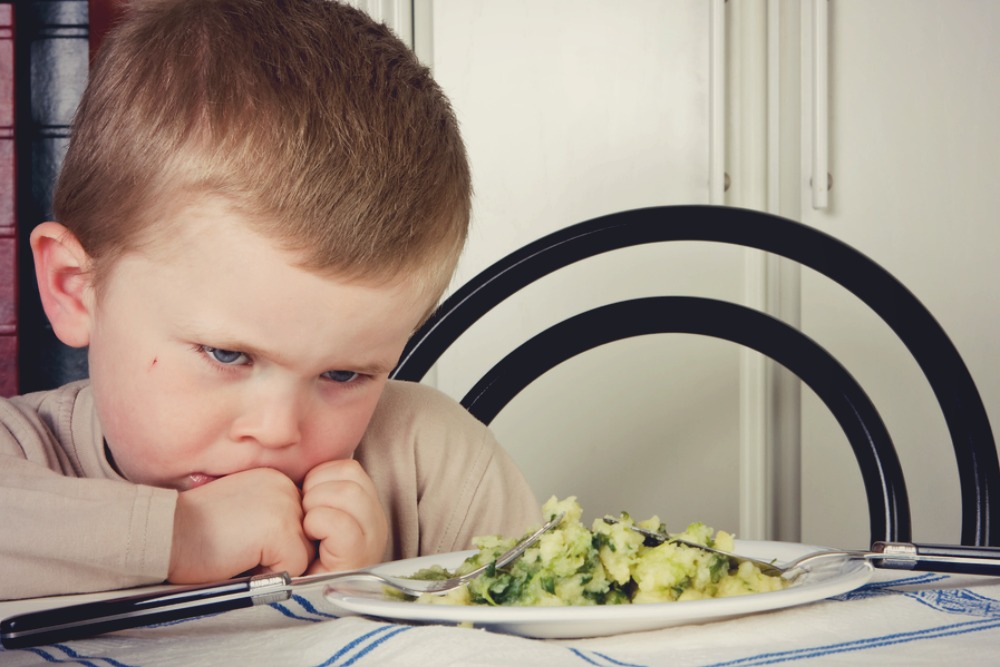
For something that is meant to be life-giving and nourishing for the body, mind and family spirit, mealtimes can be a nightmare. Not just any nightmare, but the type that can only come with a battle-weary parent and a small human who has tasted more victory at mealtimes than vegetables.
I have heard there are kiddos who come in the version that eat everything that’s put down in front of them. That’s not how it was at my house, and if it’s not that way at your home either, take heart. Fussy eating, as tough as it is to deal with when it happens, is a very ‘normal’ part of childhood.
‘… children naturally go through stages during their toddler years when they are often fussy and will refuse new foods, particularly vegetables. This is a normal developmental stage for children, but it can often lead to a restricted diet as children become fussier and fussier about what they will not eat. Families need evidence-based scientific advice about what they can do to help encourage children to taste, and eventually like, new or disliked fruits and vegetables.’ – Dr Claire Farrow, Aston Research Centre for Child Health.
As comforting as it is to know that your little one isn’t doing anything out of the ordinary, it will bring cold relief when the dinner table becomes a battleground. Now, science has found a way to help. New research has found that with three simple steps, parents can positively change their child’s attitude towards food.
The research, published in the journal, Appetite, found that introducing three steps dramatically increased children’s liking and eating of vegetables that they had previously rejected.
The steps … Tell me the steps.
The important thing to remember is persistence. You have to be persistent. (Yes I know – I wish it could be easier too!) Knowing the difference these steps can make will make it easier to stand firm. Little ones are tough. They are skilled and highly effective negotiators. Don’t let anyone tell you differently. Here’s what you need to know to bring yourself up to their level of negotiating prowess.
Step 1 – Repetition: Repeatedly expose your child to the food. Try the same vegetable for at least 14 days in a row. Be patient. The idea is to help them become familiar with the food. Kids might need to try something up to ten times – maybe more – before they feel familiar enough to be okay with it. If they reject the food don’t worry – it’s not over, it’s a win. It means you’re one try closer to mealtime bliss. Or a taste without argument. Same thing.
Step 2 – Role Modelling: Eat it first and show them how delicious it is.
Step 3 – Rewards: Praise them for trying, even if they’ve only taken a tiny bite. Or a lick. It all counts. All great achievements start with plenty of small, imperfect steps. You know it does.
Do this with the same vegetable/s for at least 14 days.
‘Our research shows that a combination of repeatedly exposing children to vegetables, rewarding them for trying the food and modelling enjoying eating the vegetable yourself, can help to encourage children to taste and eventually like vegetables which they did not previously like eating.’ – Dr Claire Farrow.
The eating behaviours that kids learn in childhood will often move with them as they get older. The individual steps might not come as a surprise, but knowing that they make a difference will make it easier to keep going with them when your little warrior is giving you every reason call it quits for now and try again another time.



Children are influenced by the world.
My little sister who is 6 wont eat food because she is worried about the calories.
Dear Lord, I don’t have it in me to say something.
She eats the salad and yoghurt. A wee bit of the other stuff like meat and rice. Is this fuzzy eating?
What does one do in such a situation?
Thanks.
My relative is of mixed heritage. It saddens me that he still does not like rice or eggs. I don’t know if he will ever truly enjoy Asian cuisines…or the cuisine of our people, specifically. He is still young. He takes after his dad’s tastes. Asian foods are much more flavorful. Rice is a big part of it. Eggs are used in many dishes and cultural cuisines.
I grew up a picky eater and wanted to make sure my kids did not suffer the same as I did.
1. Everything they eat is good. No criticism. No battles at meals. State what good eaters they are. It really sets up their confidence.
2. No fast food. No sugar, candy cookies before age one. No soda! It ruins their ability to taste regular food and sets them up for a lifetime of bad eating habits.
3. Give them mashed fruit and avocados before teeth. Bring a banana along for a snack. Crunchy cut up veggies with a little salad dressing, when they can chew, for a before dinner snack.
4. Make healthy food taste good. Add dressing, butter and parmigian cheese, tomato sauce, maple syrup, oregano, a little garlic.
5. Keep variety coming. Goat cheese on crackers, whole grains with pesto, pickles, etc..
6. If they don’t like something, no problem. No drama. Just acknowledge that it may be a food they will like when they are older, and again, what good eaters they are eating their other food! If you like it keep enjoying it.
So, my kids grew up without the burden of pickiness and with the ability to make healthy choices.
Can you maybe post something on the subject of Food Neophobia?