
I once believed suicide was my only option. I had developed belief systems in my childhood that I was unaware of until i was 26 years old. These beliefs were strong and complex, many to do with how I viewed myself and how I viewed other people. Suicide first became an option for me when I was only 12 years old. My Dad’s brother took his life and that changed the course of my life forever. I still remember the phone call from my Dad and him telling me what my favourite uncle had done to himself. I was horrified and confused.
At 15 I was diagnosed with Depression, my home life was always chaotic and I wore a lot of adult responsiblities that a child should not. I was put on anti depressants but not given any form of therapy. It was at this time my Nana was diagnosed with terminal cancer. That played a big part in my depression. When I was 16 my Mum, sister and I went to be with her in the final months of her life. A week before she died, my Mum’s brother committed suicide, a few days after he had died my sister, aunty and I discovered his body. The same week as this happened, a girl at my school also took her own life.
Upon returning to school that year I found it quite impossible to concentrate and dropped out a month before my sixth form year was up. The year after I decided to get a certificate in Make Up Artistry. In August of that year, my tutor commited suicide. His death hit me really hard as I was still in complete shock from finding my uncle the year before. It was all too much for me to stay, so I left my course without finishing it. I spent a lot of time drinking during the day to block out my emotional pain.
At age 18 I found myself in a relationship that was never really what I thought it was, I was dropped from a great height by a guy who was my superior at work. I found it impossible to escape from my intense emotional pain and that was when I first attempted suicide. It was also when I started to self harm, my self harm would go on to last for the next decade of my life.
I don’t remember much from this attempt. I know I woke up in a white hospital gown covered in black stuff. It was the charcoal I had been made to drink on my arrival the night before. Upon waking I was told by a nurse that I had been a very silly girl. I saw a psychiatrist later on that day and was released without much of a fuss. Looking back now I wasn’t treated with respect or compassion by the hospital staff. I was simply another statistic.
My second attempt on my life was at 19 years old, and my third at 20 years old after my Dad commited suicide. I remember nothing of these attempts whatsoever. I only know that they happened because I have the hospital paperwork to prove it.
A diagnosis of Borderline Personality Disorder was given to me when I was 19 years old, although I was never treated for it or told what it was. At the time it seemed unimportant to me, even though my life was complete chaos I didn’t think it had anything to do with the problems I had.
When I was 25, the year before I started looking into my BPD diagnosis I had made a pact with myself. If my life was no better on my 30th birthday then was the end of the road for me.
Although I entered into DBT treatment when I was 26, it took me two and a half years to get to a place where I could understand how the therapy could help me. I had been through so much trauma besides the many suicides in my life, including sexual abuse by my Dad, that it felt like I would take one step forward and five back. I was dealing with my depression the only way I knew how to, with drugs. In heindsight those addictions only made things worse and allowed the fog to stay, thick and heavy.
At age 26 I began to look into what Borderline Personality Disorder was, the symptoms set off alarm bells in my head. All of a sudden, who I was and the turmoil that was my life all made sense to me. Even though I was still wanting to give up, there was a part of me that was furiously fighting for my recovery and treatment.
I went to see my GP and asked to be refered to the public mental health system, I had spent years in and out of it already and didn’t have much faith in it. My GP explained that they had different treatment options available now so I decided to give it one last try. I saw one therapist for about 6 months and didn’t progress much at all, then I moved house and everything changed. I had moved into a different area of Auckland which meant I was no longer able to see my current therapist. I was assigned a new one and to this day I am thankful to her for saving my life.
She knew about Borderline Personality Disorder and trauma and she knew what the treatment for it was. I started a therapy called Dialectical Behavioural Therapy also known as DBT. In a nutshell, it is designed to help the patient undo the years worth of damage that had been done to them in their early years/life. I saw my therapist weekly, sometimes twice weekly and I also attended a DBT skills group. The group ran for 6 months at a time and I completed it twice. I did attempt the group two times previously but because DBT is very hard to grasp, I only lasted a few weeks and then dropped out.
By the time I had completed the DBT group for the second time around I was 28 and a half years old and in a new relationship. I had only had two previously because I was always too mentally ill to cope with one. This time was different. I was no longer using hard drugs, my mental state had become less fragmented and less fragile, the fog was slowly starting to lift. I had also stopped self harming a week before i met my then boyfriend, now husband. To this day, I am almost 4 and a half years free from self injury. I still struggled a lot throughout that year as my youngest brother tried to end his life three times. I worried for his life daily. Thankfully he is not in that same place now.
My 30th birthday was a strange day, I remember driving home from the shops and it hit me, I thought to myself, this is what i would have missed today. I heard the birds chirping and felt the sun shining on my face through the car window. I felt alive. It overwhelmed me and I started to cry. Happy tears though, I was grateful to be alive.
At age 31 I was married to the most amazing, patient and kind man I could have ever hoped to have met. Marriage is something I never thought possible for my life. Up until meeting him a week before my 28th birthday, I didn’t make plans for my life, I was simply waiting to die.
Today I am 32 and am still in treatment, still using my DBT skills. I still live with depression and BPD, but I am no longer an addict, I am no longer controlled by my illness. Although I am still a work in progress I have made a commitment to life, I will deal with whatever life has to offer me because I know I can get through anything. I am commited to ending the shame and stigma that surrounds mental illness.
My goal for the future is to one day be strong enough to give my voice publicly for all those who suffer in silence. Mental illness is not a choice, and often someone who has a mental illness has been through trauma. This is especially true for those who are diagnosed with Borderline Personality Disorder. Education is the key to understand mental illness. If you or someone you know is suffering the best thing you can do is be there to support them.
Help is real, hope is real, and recovery is possible. Fight for yourself and your life because you are so very worth it.
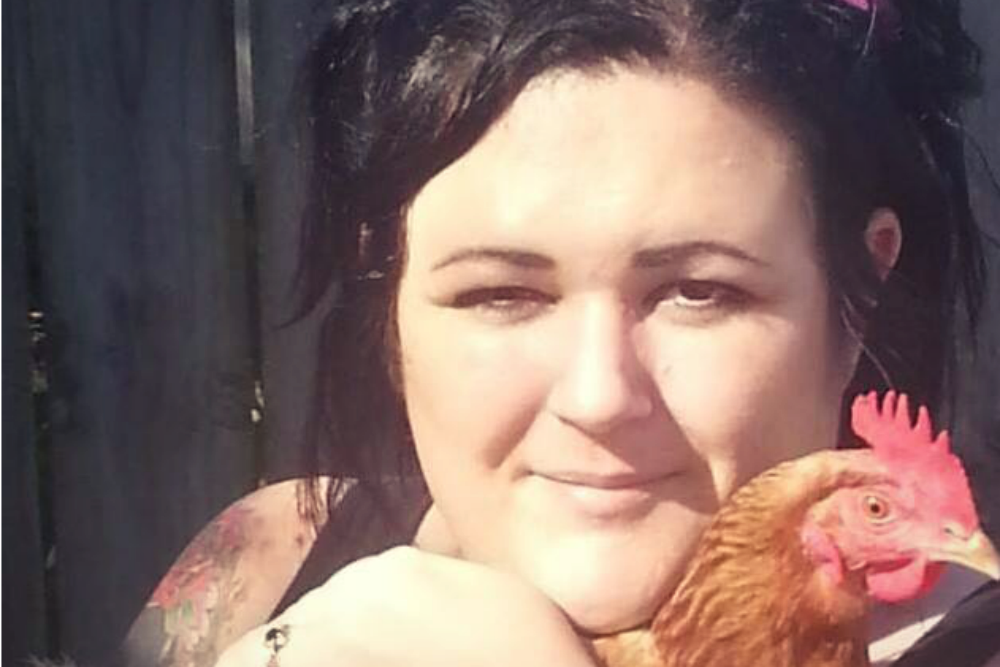
(Main image provided by author, Amy Evans, and used here with permission.)
About the Author: Amy Evans
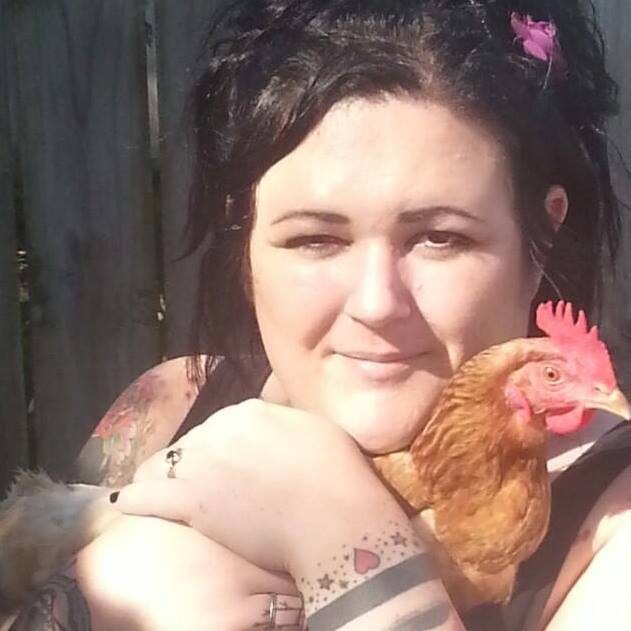 My animals have played a big part in my recovery, having two hungry cats and six chickens gives you pretty good reasons to get out of bed even on the days you’d rather not. I continue to see my therapist fortnightly and work through my trauma but it no longer cripples me like it once did.
Through the last 6 years of my recovery, I have gained a great insight into the human spirit, I choose to see the good in people, I choose to see their strength. My world once black and white is now seen through coloured eyes. Eyes of compassion, hope, empathy, love, laughter and most important of all, life. My life.



Leave a Reply