

I’d love to reach out to all the moms out there who maybe didn’t have a mom. Or at least not the kind you’d ever call Mom. You didn’t have a Mom who would put a band-aid on your knee when you fell skating, or maybe you never even got to skate with her. You didn’t have the kind of Mom you could go to when you broke your ceramic candlestick in second grade, or when your friend didn’t invite you to her sleepover party, or when you got your period. She wasn’t there for you – at least not in the way you needed – when you got married, and she certainly wasn’t there for you when the baby came helping teach you how to nurse, doing the extra laundry and getting some groceries.
And yet, here you are, grown up, with a family all your own. Now YOU are Mom. And maybe sometimes it feels confusing. How do you lead someone down a path on which no one ever lead you? It can feel like you are carrying the weight of not just the childhood you want to give your child, but also the weight of the childhood you never had but always longed for. And now that magical childhood is here but it’s someone else’s – your child’s. And weirdly you find yourself jealous sometimes. How come they get this amazing care you never did? And sometimes you find yourself at a loss. Wanting to give them just the right kind of leadership and love but quite literally not knowing what to do. It’s not in your bones. No one ever put it there.
What you need to know is this … You were worthy of love always. You were worth band-aids and Kleenex and messy kitchens full of birthday dinners and all of it. And if you didn’t get it, it’s not because of you. It’s because maybe your Mom never got it and didn’t know how to pass it on. Maybe she was ill and couldn’t. Maybe she was working to make ends meet and didn’t have the support she needed to give you what you needed. Chances are she probably needed a lot more help and support too.
See, we aren’t meant to walk this journey alone. And when we try to, everyone suffers. And yet, we have this idea that we will somehow just know how to parent. That loving our children automatically comes with the ability to parent them. But as with most things in life, parenting is something we learn. Either we learn it as a child, receiving the love and care in such a way that we are able to pass it on because in our bones we know it. Or we know it in our hearts but not in our bones, and then we have to learn how to transmit it. Or, some of us are busy unlearning what we learned so we can re-learn something new entirely.
Learning is no shame. It is an honor, a bravery. An act of courage that says I know what I got, but I am more than that. I have a dream in my heart that is bigger than my reality. And I am going to be brave enough to learn how to make it happen. I am going to rewrite that which was written down before me and handed to me. I will make it my story, and then it will be my children’s. And they will make it theirs.
So if this is you, please know that you aren’t alone. And that if it is not all coming naturally, be kind to yourself. It is simply an invitation to go inside, get clear on what you do want your life to look like. What kind of mom do you want to be, regardless of what you were handed? Because it is possible to rewrite the future. And in so doing, you also get to heal the past.
About the author: Abigail Wald
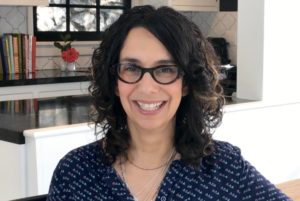 Abigail is the mom of two terrific guys, 8 and 10. She assumed she would know how to parent them just because she loved them, and was surprised to learn that love is not enough, and that parenting lovingly and effectively actually requires a set of skills you can learn! After many years of research, these days she is a certified Hand in Hand Parenting Consultant. She is deeply passionate about sharing these amazing and counterintuitive tools with parents and loves that they are as supportive to the parents as they are to the kids! She can be reached at RealTimeParenting.com. She is kind, funny, and honest, and will give you a free 15 minutes any day to listen to your story and help in whatever way she can.



all my life I wondered why I was literally petrified of my mother. everytime I walked into the house she would look at me life I was the most despicable thing she had every seen. I would always have to build myself up to go home. i remember the day she started hating me. I just want to know why. why did she always hate me soooooooooooooo much. it was like pure hatred. now I’m a mom and I’ve warmed up to the role but I didn’t know what to do with them for a while. to this day she denies these claims but there is literally physical evidence. In every picture I am the furthest away possible from her looking terrified. I can see it in my eyes. i just want to know. what I did so wrong on that day to make her hate me. years later after daily abuse… I had just gotten a cell phone. I was coming back from babysitting. and I received a text from her saying “I love you, but I don’t like you.” we hadn’t even spoken that day. it was just out of the blue coming home from babysitting a neighbor….. what could a child possibly do to make you hate her so much. I’ll never understand.
I guess rant over. even though there’s so much more….
point is, how do you mother when you never had one to begin with…. its hard.
but maybe you were never loved as a child so when you had children you could so desperately love them. and maybe you do need them. more than they need you. and that okay. cuz everyone knows thats just not true. kids always need you more.
I’m so disgusted and hurt.
you were a terrible mom.
Great comfort from this article!! It took me a while and lots of reflections to understand and accept that my parents offered to me what they were capable of.. I don’t have kids but interacting with my nieces, nephews and friends kids I can relate to my own self, and be a kid around them that’s receiving love too. Loving that kid that is still here with me brings peace and happiness. Love all the comments and sharing around this topic 😉
Thank you, I grew up in foster care and none of the “mother’s” were motherly.
So very beautiful written. I got goosebumps when I ready I was worthy of love always.
You nailed it – How very odd that sometimes I feel jealous of the great childhood that I’m creating for my wonderful children.
How painful it is sometimes to remember I never went skating, shopping for clothes or to the movies with my mum but I also tell a better story now. The lack in my childhood has meaning now.
It made me desire to give my children the best I could and while she never put a bandaid on my knee, that also made me much stronger and self reliant.
I try and balance the two extremes with my own children. I show them unconditional love, support and fun but also the ability to find their own strength from backing away when it’s just a bandaid they need. Sometimes I swing from one extreme to the other but that’s OK. I dont be perfect.
You see I’m not only self soothing here but reminding anyone reading this that being there for our children and bonding with them can be enough.
I use articles like these to see where I’m at. So far I’m feeling great about my role as mum. I hope I end up like the mum above ^^^ who’s wonderful mothering created a new cycle of happiness and hopefully will give my daughters some kind of understanding what they can achieve as a mother in the future. They have the blue print now and I’m sure they will get better and better as the generations are created.
The new cycle started with us ladies (and gents). Be very proud.
Thank you for your article. I suffered not only from unloving parents.. Because I never knew what real love is.. I married a man who just like my parents for 29 years.
Now I am still trying to amend my relationship with my young adult kids. It is never to late to learn how to show love from your heart and I still believe that I will be loved and experience the true love relationship in the future.
I thought my daughter was the only Abigail Wald!
This hit me so hard! I would have loved to hear these words when I was raising my children. As a mother who didn’t have a mother emotionally – sometimes I was at a loss when raising my own children. I did know however that I couldn’t go very wrong if I did everything with a loving heart. I now have two adult children who are raising their children and I couldn’t be more proud of the job I did and they job they are doing! Thank- you for your wise words – may they help another motherless mother raising children today!
Thank you so much for your response you took the words right of my head. I am raising 4,8,10,12. I find it reassuring that although I am clueless most often my heart is full of love and that is enough
This is exactly what I needed today! Thank you!