

0 items | AUD  0.00

Anxiety in Kids and the Calming, Brave-Building Power of Touch

Anxiety in Children - Touch, Oxytocin

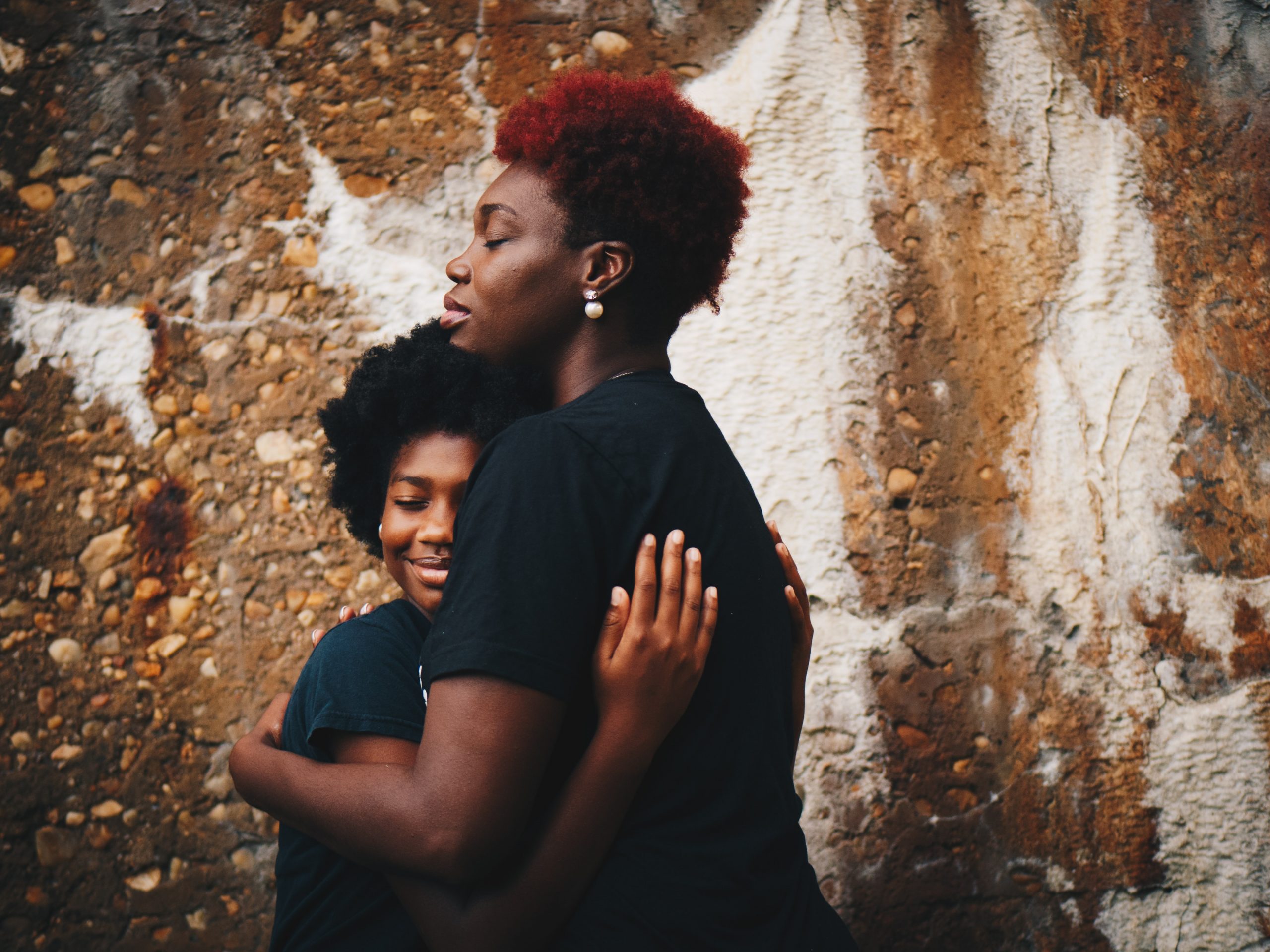
We have something at our fingertips, literally, which is so incredibly powerful that it can calm anxiety and gently open the way to brave behaviour. It’s touch, and when we use it in ways that are safe, warm, and invited, it can soothe anxiety and help the brain and body come to rest. 

The magic happens in the amygdala, which is also the part of the brain where anxiety happens. The amygdala keeps us safe by constantly scanning the environment for threat and making lightning-quick decisions about whether to avoid or approach. It does its job beautifully, but sometimes it becomes a little overprotective and pushes too hard for avoidance. This is when anxiety can cause more trouble than it deserves to.

A brain that protects is lovely – we want that – but protection in the absence of threat becomes overprotection – and we don’t want that. Protection holds our children back from danger. Overprotection just holds them back. The good news – the great news – is that if you are a trusted someone, you have the most profound capacity to lead the young ones in your care back to a felt sense of safety, calm, and rest. This is the starting point for brave behaviour. 

Why the amygdala loooooves oxytocin. (Honestly, it adores it).

One thing that influences the amygdala’s decision about whether to avoid something or move bravely towards it, is the release of oxytocin – the chemical of calm and connect – into the medial region of the amygdala. This is the section of the amygdala that is heavily involved in our reactions to other people, specifically whether to avoid them or move towards them. Sometimes avoidance is a perfect move – some people can be a pity and are best avoided – but sometimes the amygdala can hit the ‘stay away’ button unnecessarily. This can drive anxiety in any situation where there are people – school, unfamiliar or new situations, anything social. The amygdala has receptors designed to receive oxytocin, and when it gets a big luscious dose, the amygdala feels safer and calmer – which means less anxiety, less avoidance, more brave behaviour. We’re wired for touch, and we’re wired to feel safest when we’re closest to our trusted people.

The curious thing about anxious kiddos and oxytocin.

Anxious children, particularly children with separation anxiety, have been found to have lower levels of oxytocin than other children. If physical closeness and touch increases oxytocin, it makes so much sense that many children with anxiety might show clinginess or a fierce need to be close to their important big people. 

Oxytocin is released when we feel close to someone we care about. When our kids and teens are in the thick of anxiety, if we are one of their safe people and if they are okay with touch, touching them gently, putting your arm around them, or holding their hand can facilitate a delivery of oxytocin directly to the medial amygdala, reducing the need to avoid. 

Don’t forget your nonverbals.

Add the gentle, calming use of nonverbals to the use of safe touch, and the brain’s defence system will start to let receive big messages of safety, and the invitation to let go of its fierce need to protect. The kinds of nonverbals that help with the release of oxytocin are a mutual gaze, parentese (the sing-songy voice we often use with babies and small children), and warm, loving facial expressions. An anxious brain can have a tendency to interpret neutral faces and low monotone voices as threat, so let your vibe be a whole-body one of warmth, invitation and calm. 

And the most important part …

Here’s the important part – once the brain has started to register calm, there always has to be encouragement towards brave behaviour. Children will be looking to their important adults for signs of safety. They will pick up on nonverbals, voice, body, gestures quicker than any words we speak, so it is important to assume a leadership presence and send through big messages of safety and your belief that they can move towards that important, meaningful thing that is triggering their anxiety.

This can be tough if you’re also feeling a little anxious about what they’re going through. This is why their brave so often has to start with ours. When you are feeling uncertain, tap into that part of you that knows they will be safe enough, and that they can brave enough.

They’ve got this, because you do.

Touch them, hold them, stay close to them. Let your voice be gentle and your face be warm. Let your presence be strong, calm, and certain. Connect with them by looking them in the eye (also releases oxytocin), align with their brave, then gently move them forward – ‘I know you can do this, love. I know you can.’

8 Comments

Aliyah W

I don’t think that in a stressful situation, a child can be calmed by hugs alone, but as one of the methods with an integrated approach, hugs are really useful.

Reply
April A

Deeply encouraging for me and thank you for clear instructions on how to help our children and ourselves. There is so much help in this article, thank you.

Reply
Catriona C

I really enjoyed the tone of this article, I’m pretty sure my oxytocin level rose just by reading it! And the words, ‘A brain that protects is lovely – we want that – but protection in the absence of threat becomes overprotection – and we don’t want that. Protection holds our children back from danger. Overprotection just holds them back.’ should be known by every parent. Thank you so much, this article helped me a lot.

Reply
Amanda A

Wonderful magic of a hug! Sometimes complex and seemingly uncontrollable feelings like anxiety or panic can be defused by a simple touch.
Thank you, very informative! The scientific explanation is very helpful in understanding how the brain works.

Reply
Unabis

Thank you for talking about this. I have always thought that hugging is a great way to show your feelings and support to a certain person. Although many consider this a manifestation of weakness, especially on the part of a man. But I believe that this is not the case. We all feel morally bad at times, and hugs are wonderful support.

Reply
Alexandra R

I love this thank you this is such great encouragement for us as parents. It is so true for my teenager who is challenged with anxiety, he is huge 6ft 3, 15 years old and needs hugs allot, such a beautiful soul this is him all over thank you so much for reminding us and also helping us to understand. thank you 🙂

Reply

Leave a Reply

Your email address will not be published. Required fields are marked *


Join our newsletter

We would love you to follow us on Social Media to stay up to date with the latest Hey Sigmund news and upcoming events.

Follow Hey Sigmund on Instagram

Their calm and courage starts with ours.

This doesn’t mean we have to feel calm or brave. The truth is that when a young person is anxious, angry, or overwhelmed, we probably won’t feel calm or brave.

Where you can, tap into that part of you that knows they are safe enough and that they are capable of being brave enough. Then breathe. 

Breathing calms our nervous system so theirs can settle alongside. 

This is co-regulation. It lets them borrow our calm when theirs is feeling out of reach for a while. Breathe and be with.

This is how calm is caught.

Now for the brave: Rather than avoiding the brave, important, growthful things they need to do, as long as they are safe, comfort them through it.

This takes courage. Of course you’ll want to protect them from anything that feels tough or uncomfortable, but as long as they are safe, we don’t need to.

This is how we give them the experience they need to trust their capacity to do hard things, even when they are anxious.

This is how we build their brave - gently, lovingly, one tiny brave step after another. 

Courage isn’t about being fearless - but about trusting they can do hard things when they feel anxious about it. This will take time and lots of experience. So first, we support them through the experience of anxiety by leading, calmly, bravely through the storm.

Because courage isn’t the absence of anxiety.

It’s moving forward, with support, until confidence catches up.♥️
‘Making sure they aren’t alone in it’ means making sure we, or another adult, helps them feel seen, safe, and cared as they move towards the brave, meaningful, growthful thing.❤️
Children will look to their closest adult - a parent, a teacher, a grandparent, an aunt, an uncle - for signs of safety and signs of danger.

What the parent believes, the child will follow, for better or worse.

Anxiety doesn’t mean they aren’t safe or capable. It means they don’t feel safe or capable enough yet.

As long as they are safe, this is where they need to borrow our calm and certainty until they can find their own. 

The questions to ask are, ‘Do I believe they are safe and cared for here?’ ‘Do I believe they are capable?’

It’s okay if your answer is no to either of these. We aren’t meant to feel safe handing our kiddos over to every situation or to any adult.

But if the answer is no, that’s where the work is.

What do you need to know they are safe and cared for? What changes need to be made? What can help you feel more certain? Is their discomfort from something unsafe or from something growthful? What needs to happen to know they are capable of this?

This can be so tricky for parents as it isn’t always clear. Are they anxious because this is new or because it’s unsafe?

As long as they are relationally safe (or have an adult working towards this) and their bodies feel safe, the work is to believe in them enough for them to believe it too - to handle our very understandable distress at their distress, make space for their distress, and show them we believe in them by what we do next: support avoidance or brave behaviour.

As long as they are safe, we don’t need to get rid of their anxiety or big feelings. Lovingly make space for those feelings AND brave behaviour. They can feel anxious and do brave. 

‘I know this feels big. Bring all your feelings to me. I can look after you through all of it. And yes, this is happening. I know you can do this. We’ll do it together.’

But we have to be kind and patient with ourselves too. The same instinct that makes you a wonderful parent - the attachment instinct - might send your ‘they’re not safe’ radar into overdrive. 

Talk to their adults at school, talk to them, get the info you need to feel certain enough, and trust they are safe, and capable enough, even when anxiety (theirs and yours) is saying no.❤️
Anxiety in kids is tough for everyone - kids and the adults who care about them.

It’s awful for them and confusing for us. Do we move them forward? Hold them back? Is this growing them? Hurting them?

As long as they are safe - as long as they feel cared for through it and their bodies feel okay - anxiety doesn’t mean something is wrong. 
It also doesn’t mean they aren’t capable.

It means there is a gap: ‘I want to, but I don’t know that I’ll be okay.’

As long as they are safe, they don’t need to avoid the situation. They need to keep going, with support, so they can gather the evidence they need. This might take time and lots of experiences.

The brain will always abandon the ‘I want to,’ in any situation that doesn’t have enough evidence - yet - that they’re safe.

Here’s the problem. If we support avoidance of safe situations, the brain doesn’t get the experience it needs to know the difference between hard, growthful things (like school, exams, driving tests, setting boundaries, job interviews, new friendships) and dangerous things. 

It takes time and lots of experience to be able to handle the discomfort of anxiety - and all hard, important, growthful things will come with anxiety.

The work for us isn’t to hold them back from safe situations (even though we’ll want to) but to help them feel supported through the anxiety.

This is part of helping them gather the evidence their brains and bodies need to know they can feel safe and do hard things, even when they are anxious.

Think of the space between comfortable (before the growthful thing) and ‘I’ve done the important, growthful thing,’ as ‘the brave space’. 

But it never feels brave. It feels like anxious, nervous, stressed, scared, awkward, clumsy. It’s all brave - because that’s what anxiety is. It’s handling the discomfort of the brave space while they inch toward the important thing.

Any experience in the brave space matters. Even if it’s just little steps at a time. Why? Because this is where they learn that they don’t need to be scared of anxiety when they’re heading towards something important. As long as they are safe, the anxiety of the brave space won’t hurt them. It will grow them.❤️
In the first few days or weeks of school, feelings might get big. This might happen before school (the anticipation) or after school (when their nervous systems reach capacity).

As long as they are safe (relationally, physiologically) their anxiety is normal and understandable and we don’t need to ‘fix’ it or rush them through it. 

They’re doing something big, something brave. Their brains and bodies will be searching for the familiar in the unfamiliar. They’re getting to know new routines, spaces, people. It’s a lot! Feeling safe in that might take time. But feeling safe and being safe are different. 

We don’t need to stop their anxiety or rush them through it. Our work is to help them move with it. Because when they feel anxious, and get safely through the other side of that anxiety, they learn something so important: they learn they can do hard things - even when they feel like they don’t have what it takes, they can do hard things. We know this about them already, but they’ll need experience in safe, caring environments, little by little, to know this for themselves.

Help them move through it by letting them know that all their feelings are safe with you, that their feelings make sense, and at the end of the day, let those feelings do what they need to. If they need to burst out of them like a little meteor shower, that’s okay. Maybe they’ll need to talk, or not, or cry, or get loud, or play, or be still, or messy for a while. That’s okay. It’s a nervous system at capacity looking for the release valve. It’s not a bad child. It’s never that. 

Tomorrow might be tricker, and the next day trickier, until their brains and bodies get enough experience that this is okay.

As long as they are safe, and they get there, it all counts. It’s all brave. It’s all enough.❤️