
0 items | AUD  0.00


About Karen Young

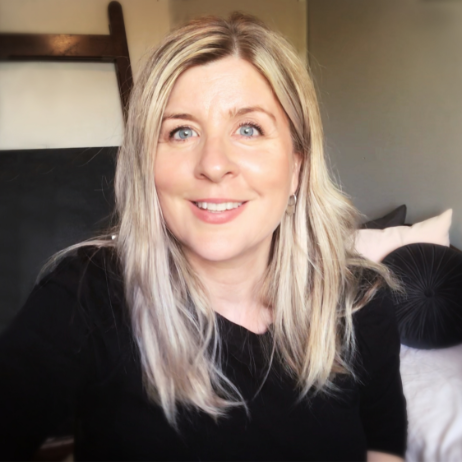
Karen began her career as a psychologist in private practice and is now recognised as a leading authority on child and adolescent anxiety. She has worked extensively with children, teens, and families, and in educational and organisational settings. She has lectured and has a Masters in Gestalt Therapy. It is through her work with children, teens, and families that she learned the power of solid information when it is placed in the solid, loving hands of parents or any important person in a child’s world. 

Karen created Hey Sigmund, an internationally popular online resource, to provide contemporary, research-driven information on the art of being human, and being with humans. The website has a particular emphasis on strengthening the mental wellness of children and adolescents. It attracts millions of readers each year worldwide. The articles have been translated into several languages and published on various international sites.

Karen is often invited to comment by Australian and international media outlets, including The Project, and as a regular guest on ABC Radio. She is a sought-after speaker and consultant and works with schools, government bodies, and child and adolescent-focused organisations, both in Australia and internationally to build resources, implement procedures, and support the professional development of staff. 

She is the author of six books, including the bestselling ‘Hey Warrior’, which alone has sold over 200,000 copies worldwide. Karen’s books creatively assist children to understand and manage anxiety and other feelings, and build the capacity for self-regulation. The books have been translated into a number of languages and have together sold more than 400,000 copies worldwide. 

Karen lives in Australia and has two children and two stepchildren. Experience has taught her that people can do amazing things with the right information, psychology has something for everyone, jargon doesn’t, everyone has a story to tell, short bios are the longest to write, nobody has it all figured out and the best people to be around are the ones who already know this.


About ‘Hey Sigmund’ – The idea behind the website.

Because sometimes the only diagnosis is ‘human’.

Every day there are stunning new insights into the human mind and the way we work, love, play, behave, relate, think and feel. We are learning more and more about what it means to be human, and how to master the art. Now more than ever, anybody who is any version of human has something to gain from the science of psychology.

This website contains the latest research and news in psychology. It attempts to bring psychology into the mainstream, unfolding the brilliance that happens within the scientific realm. We will explain what it all means and why it matters.

Some parts will be immediately relevant to your life, some parts less so but psychology is such a fascinating relevant science that at the very least you will have some excellent fodder for dinner table conversations.

The best of us is already in us, sometimes found, sometimes waiting to be. This website provides the tools to uncover what is waiting patiently beneath our skin to be discovered, or to make a life that is already beautiful, even more so.

I hope you enjoy the readings and find courageous, daring and simple ways to incorporate them into your life.


What This Website Is – And Isn’t.

The articles, information and comments on this website provide general information only and do not constitute advice in any way.

It is important to me that the information provided on this site is thoughtful, detailed, well-researched and relevant, but it is just a guide. What is best for you will depend on your personal history and circumstances. For this reason, if you require more support, information or guidance in relation to a particular issue, please speak with a medical practitioner or counsellor who will be able to take the time to understand the detail of you, your history and your circumstances, and use this to advise you on the most effective course of action.

If you are in need of more immediate support, please click here.

Business address: PO Box 511, Indooroopilly Qld 4069, Australia

Join our newsletter

We would love you to follow us on Social Media to stay up to date with the latest Hey Sigmund news and upcoming events.

Follow Hey Sigmund on Instagram

Boundaries and belonging exist together, but how this works is something that takes loads of experience.

Children can’t learn respectful, kind, strong boundaries without someone who has modelled this over and over. It doesn’t have to be perfect every time, just enough times.

The presence kids and teens need from us is one that is warm AND strong. Love and leadership. They need both in the one person.

Strength without warmth will be experienced as controlling or bullying. Disagreement will come to mean rejection. To avoid rejection, they might be more likely to people please, say yes when they mean no, or denying their truth.

Warmth without strength will be experienced as ‘flaky’ or unreliable. If they don’t feel an adult leading, they will be more likely to take the leadership role from the adult. Someone has to fly the plane.

The third option is both - keep the boundary, add the warmth.

Make space for their disagreement, their ‘no’, and, hold the boundary with warmth. 

‘Warmth’ doesn’t mean dropping the boundary. It means being kind, and not withdrawing our affection because of their response. It means rejecting the behaviour, not them 

‘It’s okay to be angry at me. I won’t listen while you speak like that. Im right here. You’re not in trouble.’

‘I get why you hate this decision. It’s ok to be annoyed with me. I’m not changing my mind.’

‘It’s my job to keep you safe. I know it’s a tough decision and I’m not changing my mind. It’s okay to be angry at me.’

‘I care about you too much to let you do something unsafe. That’s my decision. I expect you’ll have a bit to say about it and that’s okay.’

If the give you information that does change your mind, it’s always ok to do that but make it clear it’s still a decision you’ve made in strength, not because you’ve been worn down: ‘What you said about … makes sense to me. I’d decided to change my mind.‘ OR, ‘Let’s talk about this calmly when you’re ready. What you’ve said about … makes sense to me. I’d like to talk about how we can make this happen in a way that works for both of us.’

This doesn’t have to be perfect - we’ll also reach the end of ourselves sometimes - it just has to be enough.♥️
Their calm and courage starts with ours.

This doesn’t mean we have to feel calm or brave. The truth is that when a young person is anxious, angry, or overwhelmed, we probably won’t feel calm or brave.

Where you can, tap into that part of you that knows they are safe enough and that they are capable of being brave enough. Then breathe. 

Breathing calms our nervous system so theirs can settle alongside. 

This is co-regulation. It lets them borrow our calm when theirs is feeling out of reach for a while. Breathe and be with.

This is how calm is caught.

Now for the brave: Rather than avoiding the brave, important, growthful things they need to do, as long as they are safe, comfort them through it.

This takes courage. Of course you’ll want to protect them from anything that feels tough or uncomfortable, but as long as they are safe, we don’t need to.

This is how we give them the experience they need to trust their capacity to do hard things, even when they are anxious.

This is how we build their brave - gently, lovingly, one tiny brave step after another. 

Courage isn’t about being fearless - but about trusting they can do hard things when they feel anxious about it. This will take time and lots of experience. So first, we support them through the experience of anxiety by leading, calmly, bravely through the storm.

Because courage isn’t the absence of anxiety.

It’s moving forward, with support, until confidence catches up.♥️
‘Making sure they aren’t alone in it’ means making sure we, or another adult, helps them feel seen, safe, and cared as they move towards the brave, meaningful, growthful thing.❤️
Children will look to their closest adult - a parent, a teacher, a grandparent, an aunt, an uncle - for signs of safety and signs of danger.

What the parent believes, the child will follow, for better or worse.

Anxiety doesn’t mean they aren’t safe or capable. It means they don’t feel safe or capable enough yet.

As long as they are safe, this is where they need to borrow our calm and certainty until they can find their own. 

The questions to ask are, ‘Do I believe they are safe and cared for here?’ ‘Do I believe they are capable?’

It’s okay if your answer is no to either of these. We aren’t meant to feel safe handing our kiddos over to every situation or to any adult.

But if the answer is no, that’s where the work is.

What do you need to know they are safe and cared for? What changes need to be made? What can help you feel more certain? Is their discomfort from something unsafe or from something growthful? What needs to happen to know they are capable of this?

This can be so tricky for parents as it isn’t always clear. Are they anxious because this is new or because it’s unsafe?

As long as they are relationally safe (or have an adult working towards this) and their bodies feel safe, the work is to believe in them enough for them to believe it too - to handle our very understandable distress at their distress, make space for their distress, and show them we believe in them by what we do next: support avoidance or brave behaviour.

As long as they are safe, we don’t need to get rid of their anxiety or big feelings. Lovingly make space for those feelings AND brave behaviour. They can feel anxious and do brave. 

‘I know this feels big. Bring all your feelings to me. I can look after you through all of it. And yes, this is happening. I know you can do this. We’ll do it together.’

But we have to be kind and patient with ourselves too. The same instinct that makes you a wonderful parent - the attachment instinct - might send your ‘they’re not safe’ radar into overdrive. 

Talk to their adults at school, talk to them, get the info you need to feel certain enough, and trust they are safe, and capable enough, even when anxiety (theirs and yours) is saying no.❤️
Anxiety in kids is tough for everyone - kids and the adults who care about them.

It’s awful for them and confusing for us. Do we move them forward? Hold them back? Is this growing them? Hurting them?

As long as they are safe - as long as they feel cared for through it and their bodies feel okay - anxiety doesn’t mean something is wrong. 
It also doesn’t mean they aren’t capable.

It means there is a gap: ‘I want to, but I don’t know that I’ll be okay.’

As long as they are safe, they don’t need to avoid the situation. They need to keep going, with support, so they can gather the evidence they need. This might take time and lots of experiences.

The brain will always abandon the ‘I want to,’ in any situation that doesn’t have enough evidence - yet - that they’re safe.

Here’s the problem. If we support avoidance of safe situations, the brain doesn’t get the experience it needs to know the difference between hard, growthful things (like school, exams, driving tests, setting boundaries, job interviews, new friendships) and dangerous things. 

It takes time and lots of experience to be able to handle the discomfort of anxiety - and all hard, important, growthful things will come with anxiety.

The work for us isn’t to hold them back from safe situations (even though we’ll want to) but to help them feel supported through the anxiety.

This is part of helping them gather the evidence their brains and bodies need to know they can feel safe and do hard things, even when they are anxious.

Think of the space between comfortable (before the growthful thing) and ‘I’ve done the important, growthful thing,’ as ‘the brave space’. 

But it never feels brave. It feels like anxious, nervous, stressed, scared, awkward, clumsy. It’s all brave - because that’s what anxiety is. It’s handling the discomfort of the brave space while they inch toward the important thing.

Any experience in the brave space matters. Even if it’s just little steps at a time. Why? Because this is where they learn that they don’t need to be scared of anxiety when they’re heading towards something important. As long as they are safe, the anxiety of the brave space won’t hurt them. It will grow them.❤️