


0 items | AUD  0.00

Guest Post: When I Grow Up I Want to Talk. My Story of Selective Mutism

When I grow up I want to talk. My story of selective mutism.
By Kathryn Harper

When my son grows up he would like to be a spy, a fireman or a cowboy. My daughter thinks she would like to be a vet.

I had many dreams when I was a child about what I might do or be when I was grown up. Becoming an author featured quite highly – along with artist, and I’m sure I went through stages of thinking I might be a teacher, an air hostess and even a fireman. Despite all of this, more than anything, I dreamed that when I grew up I would be just like everybody else.

 When I grew up, I wanted to be able to talk to people. I wanted to feel understood and I wanted to be able to answer all those questions I couldn’t answer when I was small. I dreamed and dreamed of what I would say when I could, and how I would help people to understand …

Why are you so quiet?

 When I was young I was always being asked questions: “Why don’t you talk? Why are you so quiet?” 

I never understood why people asked me those questions so often. I didn’t talk normally, so pushed with such a question, the chances I might answer were significantly less than zero.

Inside my head, a question like this would have me screaming.

My emotions would bubble up and threaten to take over, as my rigid body stood in shock, with wide eyes staring into nothing in particular, or focussing lazily on a particular section of the floor. The words would echo over and over and over, until it felt like thousands of people were standing around me, each one of them demanding an answer.

At the same time, my world would slow, and I was aware of my heart beating through my whole body. Sometimes it felt like it took over the room, every one else was moving in slow, blurry, jolting movements as my heart’s drumming filled my ears. Tears would prick my eyes, and words would flood into my throat.

 My throat, closed tight, gave nothing away. No matter how I tried, I couldn’t answer those questions. Sometimes my mouth would open and close fruitlessly. The words just wouldn’t follow.

 I wished that they would.

I wished I could talk like everybody else.

What is Selective Mutism?

I didn’t know it at the time, but when I was younger I suffered from Selective Mutism, an anxiety disorder in which the sufferer finds it impossible to talk in certain situations (even though they can talk fluently in situations where they feel more comfortable). This condition is much more common than is widely known, and it is believed that somewhere between 1:1000 to as many as 1:100 children may suffer to some degree.

Many people mistakenly believe that people like me are choosing not to speak, but it really isn’t like this at all.

The body becomes swamped with fear and anxiety, and the vocal chords are literally frozen. Speech is not possible until the anxiety is lessened – and so finding situations and spaces in which a selective mute person feels comfortable is a crucial part of helping them to recover. No amount of asking, persuading, questioning or demanding will help.

More than just shy.

 I always assumed I was shy or quiet. That’s what other people seemed to think – and I figured they must be right. However, sometimes I compared myself to other shy or quiet people and somehow something didn’t seem right.

I didn’t feel shy or quiet the way that other people were shy or quiet. I felt like there was more than this going on. I felt different, and even a little wrong.

I imagine many selective mute children might be mistaken as being shy – but hoping a selective mute child might grow out of it like shy children often do is only likely to make things worse. The earlier a child is identified as being selective mute, and given ways to manage their anxiety, the better.

Working with selective mutism.

 I always longed to feel like I was being heard. I understood that communication was about a lot more than the words that I couldn’t say, but it didn’t seem like many people were able to listen in the way I needed them to.

I longed for someone who could sense the overwhelm and anxiety I felt; someone who would take me away from the over-stimulating environments that caused my voice to shut itself down. I longed to feel acknowledged and accepted for the communication that I could manage – and I longed for the pressure to disappear.

I do not know a lot about the sliding in process that is often used to help selectively mute children today, but from what I am able to grasp, this is a way of communicating to children that you can hear them the way I once craved.

Reducing anxiety provoking stimuli and gradually expanding the comfortable space for the child to eventually include other people is something that slowly and respectfully helps the sensitivity of selective mute children to adjust. I have heard of it being used with much success, and it makes sense to me why it works.

How I found my voice.

I found my own ways to cope as a child – and managed to begin talking to meet the expectations of other people. At the time it served its purpose, as I was no longer mute – but the implications were that I would have to spend a good portion of my adult life reconnecting with my real voice and the words that I wanted to say. 

Today, I still sometimes find it difficult to talk. Words still get stuck on their way out, and sometimes I feel like I lose them completely. Sometimes what I want to say comes out as something that doesn’t quite sound like I wanted it to. Sometimes, words just fall out of my mouth, and they don’t appear to make any sense.

Other times I still can’t say anything at all.

I am learning that all of this is okay. Whether I can or can’t talk; whether people like it or they don’t; whether I am understood or judged harshly … what really matters is how I feel inside of myself, and acknowledging how far I have come.

Once upon a time I wanted many things for myself, and today I find myself living my dream. I am an author and illustrator who can talk to people in ways that help them to understand. I am reconnecting with my words, and all the time I am expanding the walls of my comfortable place.

People might still describe me as quiet, and perhaps I am in many ways, but I am no longer asked to explain myself. I do, however, feel compelled to share my explanations anyway. All those unanswered questions from my past have been asked of many other people too. Perhaps someone will find what they are looking for in my answers.
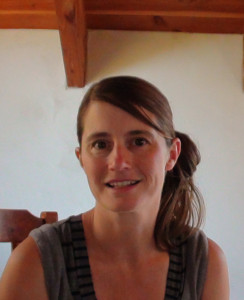

 Kathryn Harper“It feels like a purpose of mine to connect with my past and turn it into stories and lessons that will help both children and adults to Love the life they have.”

Kathryn Harper is author-illustrator of the Katie-Jane book series, written to explore emotional concepts and connect children to their feelings through fun, rhyming verse and beautiful illustrations. She also explores her personal experiences with selective mutism, anxiety and sensitivity on her blog at kathrynharper.net. 

 You can also find Kathryn on Twitter and Facebook.

6 Comments

Rachel

You describe Selective Mutism so well and as a parent of a SM child I have shared this with my friends to bring awareness to such a debilitating disorder that is sadly misunderstood for shyness (if only!). Thank you.

Reply
A

Thank you for this post. I appreciate it was written years ago, but would someone be able to share what the recommended book is? The amazon link no longer seems to work. Thank you!

Reply
Jana

Hey, I just wanted to say what you wrote about selective mutism was so beautifully written and I haven’t found a single thing i could relate to so much until I found this article thank you so much wow

Reply

Leave a Reply

Your email address will not be published. Required fields are marked *


Join our newsletter

We would love you to follow us on Social Media to stay up to date with the latest Hey Sigmund news and upcoming events.

Follow Hey Sigmund on Instagram

Their calm and courage starts with ours.

This doesn’t mean we have to feel calm or brave. The truth is that when a young person is anxious, angry, or overwhelmed, we probably won’t feel calm or brave.

Where you can, tap into that part of you that knows they are safe enough and that they are capable of being brave enough. Then breathe. 

Breathing calms our nervous system so theirs can settle alongside. 

This is co-regulation. It lets them borrow our calm when theirs is feeling out of reach for a while. Breathe and be with.

This is how calm is caught.

Now for the brave: Rather than avoiding the brave, important, growthful things they need to do, as long as they are safe, comfort them through it.

This takes courage. Of course you’ll want to protect them from anything that feels tough or uncomfortable, but as long as they are safe, we don’t need to.

This is how we give them the experience they need to trust their capacity to do hard things, even when they are anxious.

This is how we build their brave - gently, lovingly, one tiny brave step after another. 

Courage isn’t about being fearless - but about trusting they can do hard things when they feel anxious about it. This will take time and lots of experience. So first, we support them through the experience of anxiety by leading, calmly, bravely through the storm.

Because courage isn’t the absence of anxiety.

It’s moving forward, with support, until confidence catches up.♥️
‘Making sure they aren’t alone in it’ means making sure we, or another adult, helps them feel seen, safe, and cared as they move towards the brave, meaningful, growthful thing.❤️
Children will look to their closest adult - a parent, a teacher, a grandparent, an aunt, an uncle - for signs of safety and signs of danger.

What the parent believes, the child will follow, for better or worse.

Anxiety doesn’t mean they aren’t safe or capable. It means they don’t feel safe or capable enough yet.

As long as they are safe, this is where they need to borrow our calm and certainty until they can find their own. 

The questions to ask are, ‘Do I believe they are safe and cared for here?’ ‘Do I believe they are capable?’

It’s okay if your answer is no to either of these. We aren’t meant to feel safe handing our kiddos over to every situation or to any adult.

But if the answer is no, that’s where the work is.

What do you need to know they are safe and cared for? What changes need to be made? What can help you feel more certain? Is their discomfort from something unsafe or from something growthful? What needs to happen to know they are capable of this?

This can be so tricky for parents as it isn’t always clear. Are they anxious because this is new or because it’s unsafe?

As long as they are relationally safe (or have an adult working towards this) and their bodies feel safe, the work is to believe in them enough for them to believe it too - to handle our very understandable distress at their distress, make space for their distress, and show them we believe in them by what we do next: support avoidance or brave behaviour.

As long as they are safe, we don’t need to get rid of their anxiety or big feelings. Lovingly make space for those feelings AND brave behaviour. They can feel anxious and do brave. 

‘I know this feels big. Bring all your feelings to me. I can look after you through all of it. And yes, this is happening. I know you can do this. We’ll do it together.’

But we have to be kind and patient with ourselves too. The same instinct that makes you a wonderful parent - the attachment instinct - might send your ‘they’re not safe’ radar into overdrive. 

Talk to their adults at school, talk to them, get the info you need to feel certain enough, and trust they are safe, and capable enough, even when anxiety (theirs and yours) is saying no.❤️
Anxiety in kids is tough for everyone - kids and the adults who care about them.

It’s awful for them and confusing for us. Do we move them forward? Hold them back? Is this growing them? Hurting them?

As long as they are safe - as long as they feel cared for through it and their bodies feel okay - anxiety doesn’t mean something is wrong. 
It also doesn’t mean they aren’t capable.

It means there is a gap: ‘I want to, but I don’t know that I’ll be okay.’

As long as they are safe, they don’t need to avoid the situation. They need to keep going, with support, so they can gather the evidence they need. This might take time and lots of experiences.

The brain will always abandon the ‘I want to,’ in any situation that doesn’t have enough evidence - yet - that they’re safe.

Here’s the problem. If we support avoidance of safe situations, the brain doesn’t get the experience it needs to know the difference between hard, growthful things (like school, exams, driving tests, setting boundaries, job interviews, new friendships) and dangerous things. 

It takes time and lots of experience to be able to handle the discomfort of anxiety - and all hard, important, growthful things will come with anxiety.

The work for us isn’t to hold them back from safe situations (even though we’ll want to) but to help them feel supported through the anxiety.

This is part of helping them gather the evidence their brains and bodies need to know they can feel safe and do hard things, even when they are anxious.

Think of the space between comfortable (before the growthful thing) and ‘I’ve done the important, growthful thing,’ as ‘the brave space’. 

But it never feels brave. It feels like anxious, nervous, stressed, scared, awkward, clumsy. It’s all brave - because that’s what anxiety is. It’s handling the discomfort of the brave space while they inch toward the important thing.

Any experience in the brave space matters. Even if it’s just little steps at a time. Why? Because this is where they learn that they don’t need to be scared of anxiety when they’re heading towards something important. As long as they are safe, the anxiety of the brave space won’t hurt them. It will grow them.❤️
In the first few days or weeks of school, feelings might get big. This might happen before school (the anticipation) or after school (when their nervous systems reach capacity).

As long as they are safe (relationally, physiologically) their anxiety is normal and understandable and we don’t need to ‘fix’ it or rush them through it. 

They’re doing something big, something brave. Their brains and bodies will be searching for the familiar in the unfamiliar. They’re getting to know new routines, spaces, people. It’s a lot! Feeling safe in that might take time. But feeling safe and being safe are different. 

We don’t need to stop their anxiety or rush them through it. Our work is to help them move with it. Because when they feel anxious, and get safely through the other side of that anxiety, they learn something so important: they learn they can do hard things - even when they feel like they don’t have what it takes, they can do hard things. We know this about them already, but they’ll need experience in safe, caring environments, little by little, to know this for themselves.

Help them move through it by letting them know that all their feelings are safe with you, that their feelings make sense, and at the end of the day, let those feelings do what they need to. If they need to burst out of them like a little meteor shower, that’s okay. Maybe they’ll need to talk, or not, or cry, or get loud, or play, or be still, or messy for a while. That’s okay. It’s a nervous system at capacity looking for the release valve. It’s not a bad child. It’s never that. 

Tomorrow might be tricker, and the next day trickier, until their brains and bodies get enough experience that this is okay.

As long as they are safe, and they get there, it all counts. It’s all brave. It’s all enough.❤️