

0 items | AUD  0.00

Self-Compassion – Let’s Talk About Why You Need This.

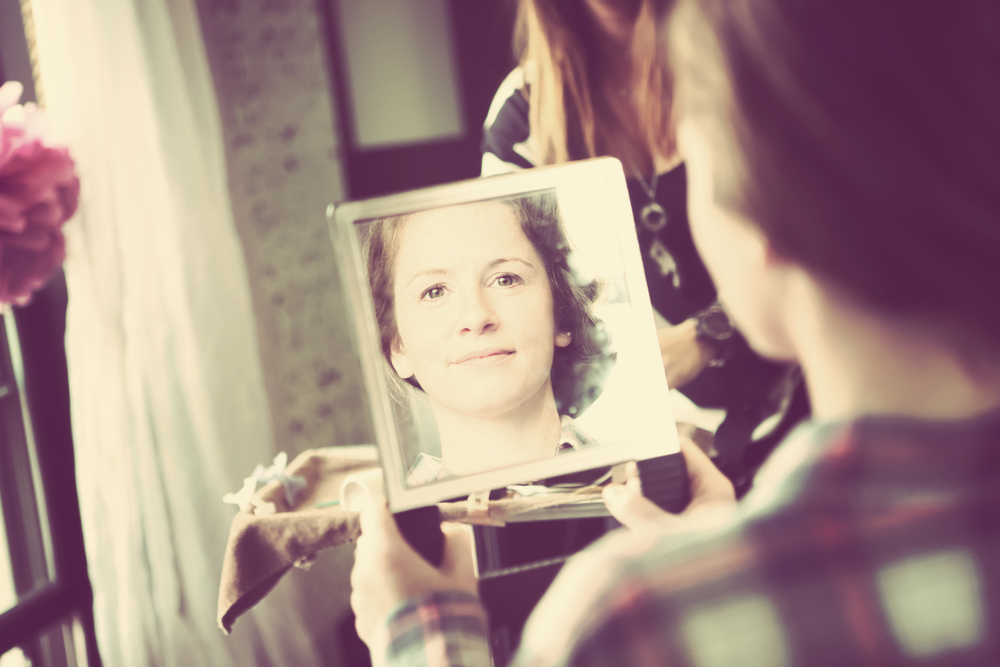
Anything that works as hard as the human body, deserves more than a constant critique of how it looks in a pair of skinny jeans. 

It’s highly probably that I’m not the only woman in the world with thighs that look like they’ve been in a hailstorm. Clearly cellulite is as keen on me as I am on oxygen – but anything that runs me around without thanks or hesitation (okay – sometimes there’s a bit of hesitation but you know what I mean) deserves appreciation.

It’s also highly probable that I’m not the only woman for whom the mere thought of double-digit sit-ups makes my abs want to throw themselves into oncoming traffic – but anything that plays such a major part in keeping me alive and healthy deserves high praise.

My arms? They hold those I love close and set the minimum distance for those I’m not keen on. Oh, and they carry, lift, write, cook, touch …

Like all bodies, mine works hard and deserves more than constant criticism about how it looks. So how do we do that?

It’s no secret how important a positive body image is, but a recent study has found that the key to a positive body image may lie in the way we respond to the disappointments and struggles that have nothing to do with physical image.

Research has found that self-compassion in any context, not just in relation to the way we see ourselves physically, lifts body image and protects against eating disorders and unhealthy weight management practices.

Accepting disappointments and struggles as a normal part of life and treating the self kindly during times that seem unrelated to body issues and eating, seems to have an effect on body image.

As researcher Professor Allison Kelly explained, ‘Women may experience a more positive body image and better eating habits if they approach disappointments and distress with kindness and recognition that these struggles are a normal part of life.’

Self-compassion – treating oneself with kindness during disappointments and difficulties – has unique benefits and important benefits.

The research found that regardless of weight and body mass index, women who had more self-compassion were more able to acknowledge and accept their imperfect body. They also had a better body image and were less concerned about weight and body shape and had a better relationship with food.

The biggest threat to self-compassion is comparison.

Only 2% of the world’s population are supermodels. The rest of us make our mark in ways other than how we look in a bikini. Thankfully.

Nobody looks the way magazines would have us believe they do. Nobody. Even the women in the photos don’t look like that.

The human body is extraordinary. It’s time to stop trashing it for the way it looks in skinny jeans and start appreciating the phenomenal things we are capable of because of the body we live in, whatever shape that takes.

 

2 Comments

Tom Cloyd MS MA

Nicely written, nicely thought out. I enjoyed it and will post a link to it on my G+ community – Trauma and Dissociation Education and Advocacy. Thanks!

Reply

Leave a Reply

Your email address will not be published. Required fields are marked *


Join our newsletter

We would love you to follow us on Social Media to stay up to date with the latest Hey Sigmund news and upcoming events.

Follow Hey Sigmund on Instagram

When terrible things happen, we want to make sense of things for our kids, but we can’t. Not in a way that feels like enough. Some things will never make any sense at all.

But here’s what you need to know: You don’t need to make sense of what’s happened to help them feel safe and held. We only need to make sense of how they feel about it - whatever that might be.

The research tells us so clearly that kids and teens are more likely to struggle after a tr@umatic event if they believe their response isn’t normal. 

This is because they’ll be more likely to interpret their response as a deficiency or a sign of breakage.

Normalising their feelings also helps them feel woven into a humanity that is loving and kind and good, and who feels the same things they do when people are hurt. 

‘How you feel makes sense to me. I feel that way too. I know we’ll get through this, and right now it’s okay to feel sad/ scared/ angry/ confused/ outraged. Talk to me whenever you want to and as much as you want to. There’s nothing you can feel or say that I can’t handle.’

And when they ask for answers that you don’t have (that none of us have) it’s always okay to say ‘I don’t know.’ 

When this happens, respond to the anxiety behind the question. 

When we can’t give them certainty about the ‘why’, give them certainty that you’ll get them through this. 

‘I don’t know why people do awful things. And I don’t need to know that to know we’ll get through this. There are so many people who are working hard to keep us safe so something like this doesn’t happen again, and I trust them.’

Remind them that they are held by many - the helpers at the time, the people working to make things safer.

We want them to know that they are woven in to a humanity that is good and kind and loving. Because however many people are ready to do the hurting, there always be far more who are ready to heal, help, and protect. This is the humanity they are part of, and the humanity they continue to build by being who they are.♥️
It’s the simple things that are everything. We know play, conversation, micro-connections, predictability, and having a responsive reliable relationship with at least one loving adult, can make the most profound difference in buffering and absorbing the sharp edges of the world. Not all children will get this at home. Many are receiving it from childcare or school. It all matters - so much. 

But simple isn’t always easy. 

Even for children from safe, loving, homes with engaged, loving parent/s there is so much now that can swallow our kids whole if we let it - the unsafe corners of the internet; screen time that intrudes on play, connection, stillness, sleep, and joy; social media that force feeds unsafe ideas of ‘normal’, and algorithms that hijack the way they see the world. 

They don’t need us to be perfect. They just need us to be enough. Enough to balance what they’re getting fed when they aren’t with us. Enough talking to them, playing with them, laughing with them, noticing them, enjoying them, loving and leading them. Not all the time. Just enough of the time. 

But first, we might have to actively protect the time when screens, social media, and the internet are out of their reach. Sometimes we’ll need to do this even when they fight hard against it. 

We don’t need them to agree with us. We just need to hear their anger or upset when we change what they’ve become used to. ‘I know you don’t want this and I know you’re angry at me for reducing your screen time. And it’s happening. You can be annoyed, and we’re still [putting phones and iPads in the basket from 5pm] (or whatever your new rules are).’♥️
What if schools could see every ‘difficult’ child as a child who feels unsafe? Everything would change. Everything.♥️